Commercial Roofing Doral: Specialist Roofing Contractors
Commercial Roofing Doral is a commercial roofing contractor delivering repair, replacement, and maintenance solutions for flat and low-slope roofing systems across Doral, Florida. Commercial Roofing Doral supports warehouses, distribution centres, retail properties, office buildings, and multi-tenant commercial facilities where roofing performance directly determines resistance to water ingress, moisture retention, and storm-related system failure. Commercial roofing systems in Doral operate under persistent high humidity, frequent heavy rainfall, and storm-driven wind exposure. These conditions introduce continuous moisture loading into roofing assemblies, where water infiltration, vapor retention, and drainage overload act together to degrade membrane performance, weaken seams, displace flashing systems, and compromise attachment points across TPO, PVC, EPDM, metal, and modified bitumen roofing systems.
- High humidity in Doral → increases moisture absorption within insulation and substrate layers → trapped moisture reduces thermal performance and promotes internal deterioration → undetected saturation leads to concealed damage and progressive system failure.
- Heavy rainfall and low-slope drainage dependence → increase the likelihood of ponding water and restricted flow → sustained water pressure stresses seams, membranes, and flashing interfaces → leak pathways form at system junctions and accelerate deterioration across the roof assembly.
- Storm exposure and wind uplift forces → apply dynamic pressure to membranes, panels, and fastening systems → movement at seams, edges, and penetrations weakens system continuity → flashing displacement, fastener failure, and membrane separation increase the risk of rapid water ingress during storm events.
Commercial Roofing Doral focuses on resolving these interconnected failure mechanisms at system level, including moisture ingress, drainage inefficiency, seam fatigue, flashing displacement, and structural exposure. From targeted leak detection and repair through to full system replacement and preventative maintenance programmes, each project is structured to control water movement, maintain assembly continuity, and prevent progressive failure under Doral’s environmental conditions. Commercial Roofing Doral exists to protect commercial buildings by managing moisture, maintaining drainage performance, and ensuring roofing systems function as complete assemblies under sustained environmental stress across the Doral market.
How Do Commercial Roofing Systems Perform Under Doral’s Moisture and Storm Conditions?
Commercial roofing systems in Doral operate under South Florida conditions defined by sustained humidity, high-volume rainfall events, and hurricane-driven wind uplift. Large-span flat roofs across logistics warehouses, distribution centres, retail plazas, and office buildings are exposed to rapid water accumulation, overloaded drainage systems, and wind-driven rain targeting seams, penetrations, and roof edges. Roofing performance in Doral is determined by how effectively each system manages water discharge, maintains seam continuity, and resists uplift across mechanically stressed roof assemblies with high concentrations of rooftop equipment.
The main commercial roofing systems serviced by Commercial Roofing Doral include:
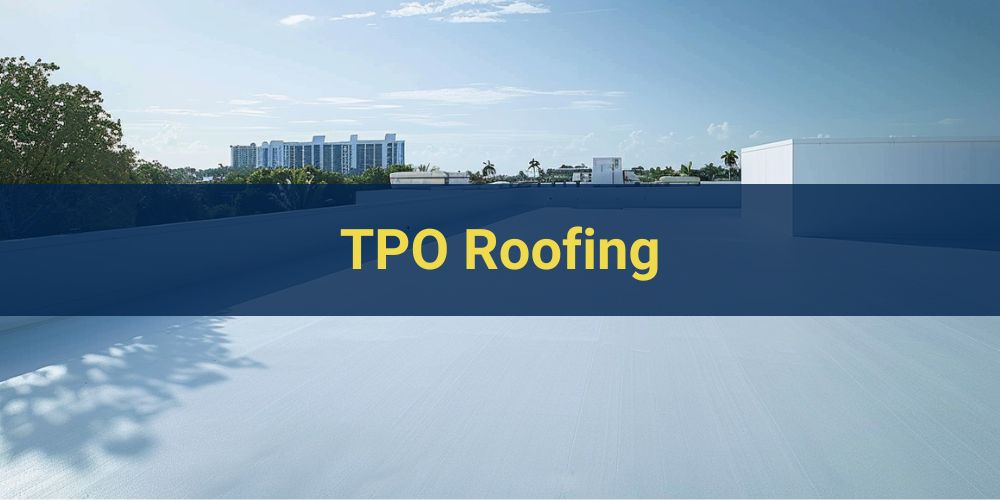
- TPO commercial roofing systems for large-span flat roofs where heat-welded seam continuity, drainage performance, and perimeter securement determine resistance to ponding water and wind uplift.
- PVC commercial roofing systems for restaurants, retail plazas, and commercial buildings exposed to grease, oils, chemicals, and moisture where weldability and membrane compatibility are critical.
- EPDM commercial roofing systems for low-slope commercial roofs where adhesive performance, seam tape stability, perimeter securement, and uplift resistance determine long-term waterproofing reliability.
- Metal commercial roofing systems for warehouses, logistics facilities, and industrial properties where fasteners, panel laps, rooftop equipment interfaces, and wind-driven rain create the main water ingress risks.
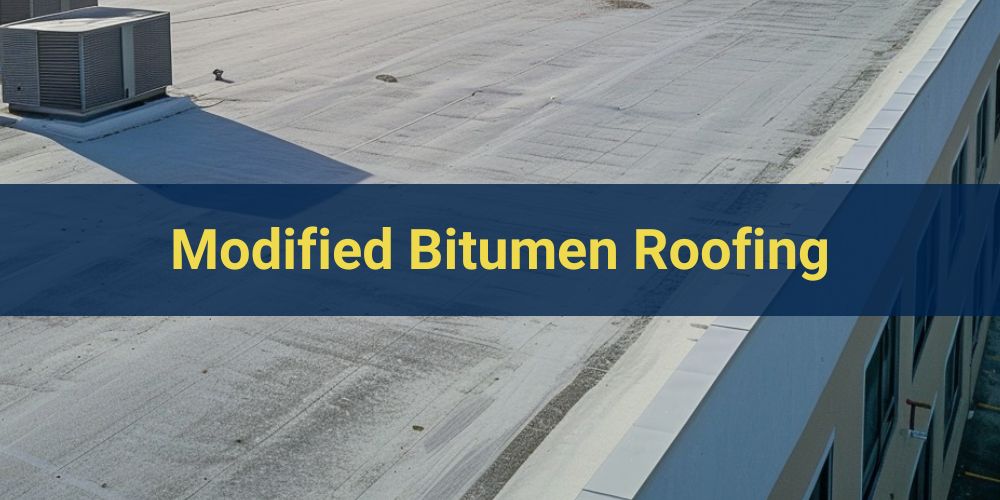
- Modified bitumen commercial roofing systems for multi-layer asphalt-based roofs where humidity, trapped moisture, blistering, seam condition, ponding water, and drainage overload affect service life.
Each system responds differently to Doral’s humidity, rainfall intensity, drainage demands, and hurricane-driven uplift, which is why Commercial Roofing Doral evaluates roofing assemblies by material behaviour, attachment method, drainage performance, and exposure risk before recommending repair, maintenance, restoration, or replacement.
1. TPO Commercial Roofing Systems
TPO commercial roofing systems in Doral are heat-welded single-ply membrane assemblies where performance depends on weld continuity, membrane attachment, perimeter securement, drainage capacity, flashing integration, insulation stability, and rooftop equipment detailing. The failure pathways below show how Doral rainfall intensity and hurricane uplift can turn TPO roof vulnerabilities into seam fatigue, membrane displacement, ponding stress, interior disruption, and large-area roof failure.
- Short-duration, high-intensity rainfall across large warehouse roofs in Doral → exceeds internal drain and scupper capacity within minutes → water accumulates across wide TPO membrane spans and applies continuous pressure to heat-welded seams, patches, drains, and flashing interfaces → seam fatigue, membrane deformation, and ponding stress develop under sustained load → drainage correction, drain-area repair, and seam reinforcement are required → uncontrolled ponding can lead to multi-point leak activation, concealed moisture spread, interior disruption, and inventory exposure.
- Hurricane uplift pressure concentrated at roof perimeters, corners, parapets, and exposed edge-metal details → stresses mechanically attached TPO membrane systems, fastening plates, terminations, and edge securement → membrane flutter, fastener stress, and perimeter detachment compromise roof system continuity → fastening systems, terminations, and edge securement are reinforced or replaced where required → without correction, wind events can trigger progressive membrane peel-back, wind-driven rain entry, and large-area roof failure.
2. PVC Commercial Roofing Systems
PVC commercial roofing systems in Doral are heat-welded polyvinyl chloride single-ply membrane assemblies where performance depends on weld integrity, membrane compatibility, chemical resistance, flashing continuity, drainage behaviour, attachment stability, and rooftop exposure conditions. The failure pathways below show how restaurant exposure, industrial discharge, tropical storm pressure, and South Florida moisture can turn PVC roof weaknesses into weld degradation, chemical-softened membrane zones, concealed saturation, and progressive system deterioration.
- Retail plazas and restaurant-heavy commercial zones in Doral → expose PVC membranes to grease discharge, exhaust residue, oils, cleaning chemicals, rooftop runoff, and persistent moisture → surface degradation, contamination, and weld-adjacent weakening reduce long-term membrane performance → affected membrane sections, exposure zones, and welds are cleaned, restored, reinforced, or replaced where required → if unaddressed, chemically stressed zones become failure points under rainfall, allowing accelerated water ingress into the roofing system.
- Wind-driven rain during tropical storm events → forces water laterally into PVC seams, flashing interfaces, penetrations, drains, and roof-to-wall transitions under pressure → minor weld inconsistencies, contaminated laps, open T-joints, or weak flashing details become active ingress pathways → seam testing, seam probing, re-welding, and compatible flashing reinforcement are required → without correction, water bypasses surface protection and enters insulation layers, leading to concealed saturation, recurring leaks, and progressive system deterioration.
3. EPDM Commercial Roofing Systems
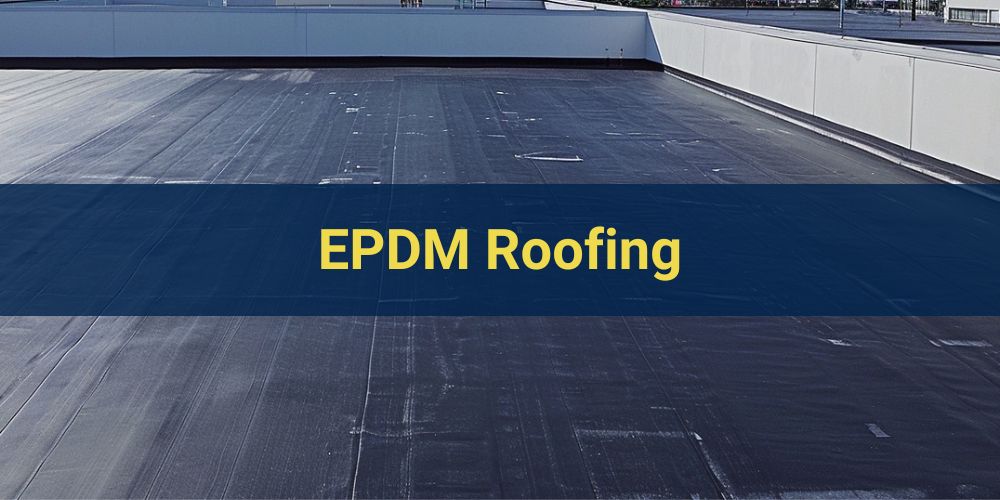
EPDM commercial roofing systems in Doral are synthetic rubber membrane assemblies where performance depends on seam tape integrity, adhesive bond strength, flashing adhesion, membrane movement control, perimeter securement, drainage performance, and resistance to humidity-driven deterioration. The failure pathways below show how Doral humidity and hurricane uplift can turn EPDM roof vulnerabilities into adhesive failure, seam separation, membrane pull-back, concealed moisture spread, and full membrane failure.
- Persistent humidity across Doral roofing assemblies → degrades adhesive bonds, seam tapes, lap adhesives, flashing bonds, and termination details in adhered EPDM systems → seam separation develops at laps, penetrations, rooftop equipment zones, curbs, drains, parapets, and prior repair areas → re-bonding, seam re-taping, flashing correction, and compatible EPDM repair are required → if left unresolved, water infiltrates through separated seams and spreads laterally beneath the membrane into insulation, cover boards, or substrate layers.
- Hurricane uplift forces acting on wide, exposed roof surfaces → stress adhered EPDM membranes, perimeter terminations, edge metal, parapets, and roof-to-wall transitions → membrane pull-back, edge instability, adhesive stress, and flashing displacement increase under repeated storm cycles → perimeter securement, termination reinforcement, flashing correction, and affected membrane replacement are required where movement has compromised system continuity → without intervention, uplift progression leads to partial detachment, wind-driven rain entry, and full membrane failure under storm conditions.
4. Commercial Metal Roofing Systems
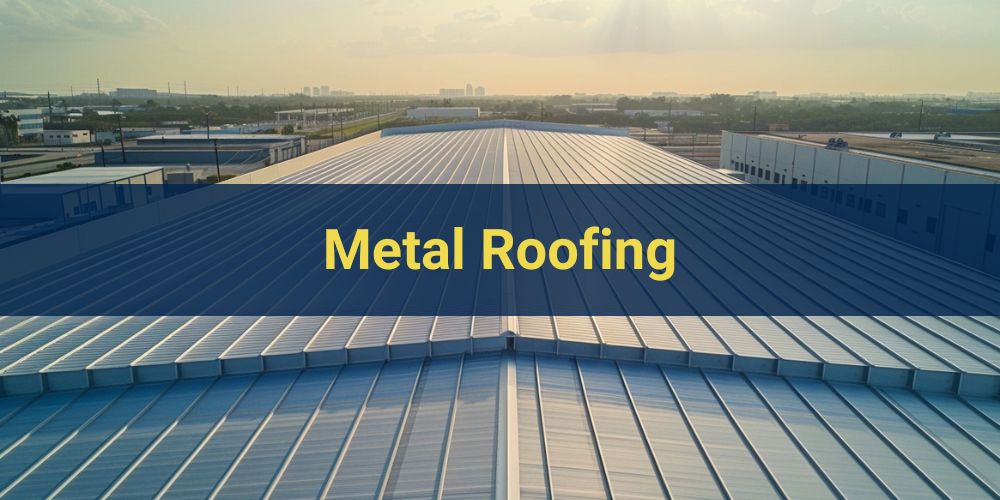
Commercial metal roofing systems in Doral are panel-based roof assemblies where performance depends on panel laps, fastener condition, washer integrity, sealant lines, flashing details, coating condition, corrosion control, drainage behaviour, and rooftop equipment integration. The failure pathways below show how wind-driven rain, humidity, and dense rooftop equipment can turn metal roof weaknesses into fastener leaks, panel-lap water entry, corrosion spread, internal damage, and expanding roof failure.
- Wind-driven rain under hurricane conditions in Doral → forces water through panel laps, fastener penetrations, deteriorated washers, roof-mounted equipment interfaces, ridge details, gutters, and flashing transitions → these become high-pressure ingress points where sealant systems, fasteners, or panel overlaps have weakened → sealing systems, fastener correction, flashing repair, panel-lap treatment, and equipment-interface reinforcement are required → if untreated, water penetrates structural layers and causes internal damage to ceilings, equipment, stored materials, and operational areas.
- High humidity exposure across commercial roofs with dense rooftop equipment → accelerates deterioration at fasteners, connection points, washers, exposed metal details, panel laps, curbs, and equipment supports → fastening systems loosen, washers harden, sealants break down, and connection points lose sealing effectiveness over time → fastener replacement, sealing correction, rust treatment, panel repair, and compatible coating are applied where the metal roof remains viable → without correction, repeated movement and exposure create expanding leak pathways across the roof.
5. Modified Bitumen Commercial Roofing Systems
Modified bitumen commercial roofing systems in Doral are asphalt-based multi-layer roof assemblies where performance depends on membrane ply condition, seams, laps, surfacing, flashing integration, adhesion, drainage behaviour, moisture control, and resistance to heat-driven movement. The failure pathways below show how humidity, trapped moisture, heat cycling, and rapid rainfall accumulation can turn modified bitumen roof vulnerabilities into blistering, delamination, seam stress, progressive leaks, and full system deterioration.
- Moisture infiltration into multi-layer modified bitumen membrane systems under Doral humidity conditions → becomes trapped between asphalt layers, insulation, cover boards, or substrate surfaces → internal vapor pressure creates blistering, delamination, surface displacement, and weakened adhesion under heat cycles → affected areas are cut out, dried where appropriate, repaired, reinforced, or reinstated with compatible modified bitumen materials → if not addressed, internal pressure expands defects and leads to widespread membrane breakdown.
- Rapid rainfall accumulation combined with drainage system overload → creates prolonged ponding across low-slope modified bitumen roofs → seams, laps, surface layers, flashing transitions, and prior repair areas are exposed to continuous water pressure → seam reinforcement, drainage correction, membrane repair, flashing review, and ponding-zone assessment are required → without intervention, sustained exposure leads to progressive leak formation, saturated roof layers, and full system deterioration.
Commercial Roofing Doral evaluates roofing systems based on how each assembly performs under Doral’s specific combination of humidity, rainfall intensity, low-slope drainage load, rooftop equipment exposure, chemical or grease contamination, heat cycling, and hurricane-driven uplift. By aligning repair, maintenance, restoration, partial replacement, and full replacement strategies with these system-specific failure mechanisms and the structural realities of large commercial roofs, roofing assemblies remain more watertight, stable, serviceable, and capable of protecting operations under high-moisture and high-impact weather exposure.
Have a question about an upcoming commercial roofing project?
How Are Commercial Roofing Projects Controlled in Doral’s Moisture and Storm Conditions?
Commercial Roofing Doral controls commercial roofing projects by managing moisture exposure, drainage load, wind uplift risk, and time-sensitive storm conditions across active commercial buildings. In Doral, roofing work is carried out under constant risk of rapid rainfall events, sudden storm escalation, and high-density rooftop equipment layouts across warehouses, logistics facilities, retail plazas, and office buildings. Project control is not limited to repair execution. It requires strict sequencing, exposure management, and verification at every stage to prevent water ingress, system destabilisation, and operational disruption during and after the work.
1. Moisture Detection and Pre-Work Exposure Control
- Moisture scanning and saturation mapping across membranes, insulation, and substrates → identifies wet zones before any cutting or repair begins → prevents sealing over trapped water → if uncontrolled, moisture remains active beneath repairs and leads to concealed spread and repeat failure within weeks.
- Penetration and rooftop equipment zone inspection (HVAC units, curbs, vents, service lines) → isolates high-risk leak concentration points → ensures work begins at failure-critical areas → if not prioritised, water continues to enter at equipment clusters and bypass newly repaired sections.
- Pre-work weather window control based on Doral storm patterns → schedules work around rainfall probability and storm timing → reduces open-roof exposure risk → if ignored, sudden rainfall during active work leads to immediate internal water intrusion.
2. Drainage Load Control Under Rapid Rainfall Conditions
- Drain, scupper, and outlet capacity assessment across large-span commercial roofs → identifies restrictions before rainfall events → ensures water can exit the roof under high load → if uncontrolled, rainfall accumulation exceeds drainage capacity within minutes, creating immediate ponding and seam stress.
- Low-point and ponding zone identification across warehouse and retail roofs → targets areas where water accumulates fastest → allows corrective grading or reinforcement → if ignored, standing water concentrates pressure and accelerates leak formation at weak points.
- Drainage continuity control around rooftop equipment and service penetrations → removes flow obstructions and redirects water pathways → prevents localised pooling → if not corrected, equipment clusters trap water and create persistent leak zones.
3. Wind-Uplift and Storm Exposure Control
- Perimeter and corner zone reinforcement prior to storm exposure → strengthens areas subject to highest uplift pressure → maintains membrane and panel stability under wind load → if uncontrolled, wind pressure initiates edge failure and progressive roof system peel-back.
- Attachment system verification across membranes, panels, and fasteners → ensures all securement points meet load requirements → prevents movement during storm events → if not controlled, loose attachments create cascading failure under uplift conditions.
- Daily closeout control during active projects → seals and secures all exposed areas before end of each work period → prevents overnight storm or rainfall exposure → if skipped, even minor rainfall can enter open sections and cause immediate interior damage.
4. Controlled Repair, Restoration, or Replacement Selection
- Localised defect isolation (seams, punctures, flashings, fasteners) → confirms whether damage is contained → allows targeted repair without unnecessary disruption → if misjudged, underlying system issues remain active and spread beyond repaired areas.
- Moisture spread and multi-zone deterioration assessment → identifies whether damage extends across insulation and substrate layers → determines restoration or replacement scope → if not controlled, partial repairs trap moisture and accelerate full system failure.
- End-of-life decision control under Doral exposure conditions → identifies roofs that cannot withstand further rainfall and storm cycles → triggers full replacement before catastrophic failure → if delayed, repeated storm exposure leads to structural damage and operational shutdown.
5. System-Specific Execution Under Active Environmental Pressure
- TPO and PVC seam welding under controlled dry conditions → ensures weld integrity is achieved before exposure to moisture → maintains watertight seam continuity → if performed under uncontrolled conditions, weak welds fail under the next rainfall event.
- EPDM bonding and seam work under humidity-aware preparation → ensures adhesion is not compromised by moisture in the substrate → restores membrane stability → if uncontrolled, bond failure occurs shortly after installation due to humidity interference.
- Metal roof sealing and fastening correction under wind-exposed conditions → secures laps, fasteners, and penetrations against driven rain → prevents water ingress under pressure → if not properly controlled, storm conditions force water through even minor gaps.
- Modified bitumen cut-out and reinstatement in saturated zones → removes trapped moisture and restores layered integrity → prevents internal pressure buildup → if skipped, blistering expands and causes widespread membrane breakdown.
6. Post-Work Verification and Ongoing Risk Control
- Full-system inspection across seams, penetrations, drainage paths, and edges → verifies that all high-risk zones have been addressed → ensures no residual defects remain → if not completed, minor missed defects develop into immediate post-project leaks.
- Drainage performance verification under simulated or observed flow conditions → confirms water movement off the roof → ensures system resilience during heavy rainfall → if unverified, drainage failure reintroduces ponding and leak risk.
- Maintenance control planning based on Doral exposure patterns → defines inspection cycles for drains, equipment zones, seams, and edges → maintains long-term performance → if neglected, minor issues compound into emergency repair scenarios.
Commercial Roofing Doral controls roofing projects by managing moisture, drainage, wind uplift, and time-sensitive storm exposure at every stage of work. This ensures roofing systems are not only repaired or replaced, but protected against the rapid failure conditions that define commercial roofing performance in Doral.
Have a question about an upcoming commercial roofing project?
Why Choose Commercial Roofing Doral for Moisture- and Storm-Critical Roofing Projects?
Commercial Roofing Doral is selected for commercial roofing projects where moisture control, drainage performance, wind-uplift resistance, and operational continuity are critical. In Doral, commercial roof failure is often caused by missed saturation, poor drainage planning, weak edge securement, incomplete seam correction, or repairs that do not account for hurricane-driven rain and rapid storm exposure. Commercial Roofing Doral reduces these risks by treating each roof as a complete assembly rather than an isolated repair area.
1. Moisture Problems Are Diagnosed Before Repairs Are Applied
- Hidden saturation within insulation, cover boards, and substrates → is identified before surface repairs begin → wet assemblies are not sealed beneath new materials → repeat leaks, trapped moisture, and concealed deterioration are prevented.
- Moisture spread around seams, penetrations, and rooftop equipment zones → is mapped before repair scope is finalised → failure zones are corrected at source → water does not continue moving beneath repaired areas.
2. Drainage Is Treated as a Core Roofing Risk in Doral
- Blocked drains, overwhelmed scuppers, low points, and restricted flow paths → are assessed as part of the roofing system → water discharge problems are corrected alongside membrane repairs → ponding, seam stress, and recurring leak formation are reduced.
- Large-span commercial roofs across warehouses, distribution centres, and retail plazas → are evaluated for rapid rainfall accumulation → drainage correction is built into the project strategy → short-duration storm events are less likely to trigger multi-point roof failure.
3. Storm Exposure and Wind-Uplift Risk Are Controlled
- Roof perimeters, corners, edges, and attachment zones → are reviewed for uplift vulnerability → securement and fastening weaknesses are corrected → membrane peel-back, panel movement, and storm-related roof displacement are prevented.
- Daily closeout, temporary weatherproofing, and exposure control → are managed during active work → partially completed roof areas are secured before rainfall or storm escalation → mid-project water intrusion and emergency disruption are avoided.
4. Repairs Are Matched to the Roofing System, Not Treated Generically
- TPO and PVC seam conditions → are corrected with compatible membrane preparation, welding, and verification → seam continuity is restored under moisture and rainfall exposure → water entry at welded joints is controlled.
- EPDM adhesive and seam tape failures → are corrected with compatible primers, bonding methods, and securement details → membrane stability is restored in humid conditions → adhesion failure and uplift movement are reduced.
- Metal and modified bitumen defects → are treated according to fastening, corrosion, seam, blistering, and moisture conditions → the correct repair or replacement route is selected → premature breakdown and repeated patching are avoided.
5. Commercial Operations Are Protected During and After the Project
- Work sequencing around tenants, inventory, equipment, and active operations → keeps roofing activity controlled around building use → disruption is limited during repair, restoration, or replacement → business continuity is maintained.
- Post-work verification across seams, penetrations, drainage paths, and storm-exposed edges → confirms that high-risk zones have been corrected → the roof is returned to service with fewer unresolved failure points → future rainfall and storm exposure are less likely to create immediate leaks.
Commercial Roofing Doral is chosen because roofing work is delivered around the actual failure conditions that define Doral commercial buildings: moisture loading, drainage overload, rooftop equipment density, wind-driven rain, and hurricane-uplift exposure. By combining moisture diagnosis, drainage control, system-specific repair methods, storm-aware execution, and post-work verification, Commercial Roofing Doral protects commercial roofs from repeat failure, operational disruption, and premature replacement.
Have a question about an upcoming commercial roofing project?
How Is Repair, Restoration, or Replacement Decided for Commercial Roofs in Doral?
Commercial Roofing Doral determines whether a roof requires repair, restoration, or full roof replacement by analysing how moisture loading, drainage performance, and storm exposure are affecting the roofing system as a complete assembly. In Doral, persistent humidity, rapid rainfall accumulation, and hurricane-driven wind uplift create conditions where visible defects often underrepresent the true extent of failure. Decisions are therefore based on moisture spread, defect distribution, drainage capacity, attachment integrity, and system stability under environmental stress, rather than isolated surface symptoms.
Commercial Roofing Doral classifies roofing conditions into defined decision pathways:
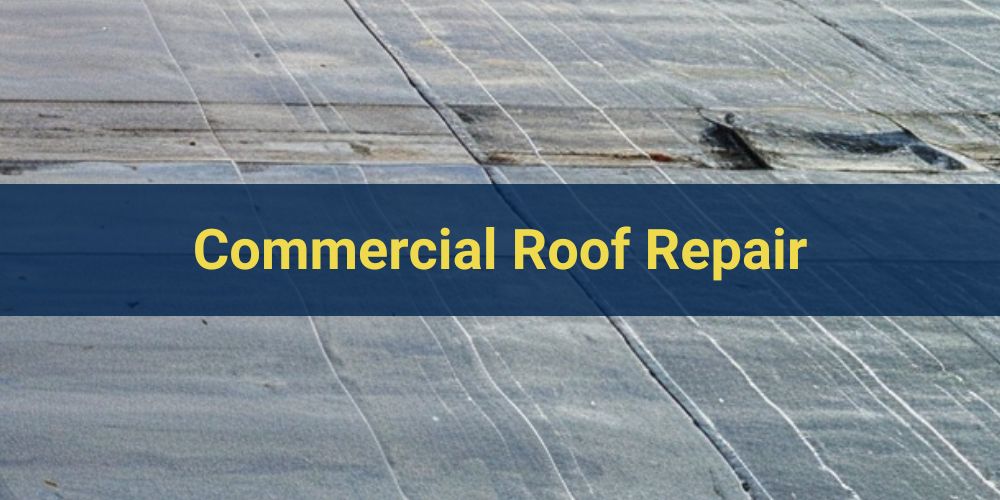
- Repair: Localised defect conditions under controlled system performance → isolated seam failure, punctures, flashing defects, or fastener issues with no widespread moisture saturation → targeted commercial roof repair is applied using system-compatible materials → defects are resolved without disturbing the wider roof assembly → water ingress is stopped while avoiding unnecessary replacement cost and operational disruption.
- Repair with Moisture Control: Early-stage saturation with limited spread → initial moisture intrusion at penetrations, drainage points, or rooftop equipment zones with confined spread → localised repair combined with moisture removal and corrective detailing is required → moisture migration pathways are eliminated before expansion → concealed deterioration, insulation breakdown, and repeat leak cycles are prevented across the roof system.
- Restoration: Surface degradation with stable substrate and structure → UV-related wear, seam fatigue, or ageing membranes across wider areas without structural failure or deep saturation → restoration coatings or reinforcement systems are applied where compatible with TPO, PVC, EPDM, metal, or modified bitumen assemblies → waterproofing performance is extended across the system → capital expenditure is deferred while maintaining protection against Doral’s humidity and rainfall exposure.
- Restoration with Drainage Correction: Performance failure driven by water accumulation → ponding zones, blocked drains, restricted flow paths, or undersized drainage systems under high-intensity Doral rainfall → drainage correction is combined with system reinforcement or restoration → water discharge capacity is restored and pressure on seams, membranes, and flashings is reduced → recurring leaks, membrane fatigue, and accelerated system ageing are controlled under future rainfall events.
- Partial Replacement: Multi-zone saturation and progressive system breakdown → moisture spread across insulation layers, multiple active leak points, and deterioration extending beyond isolated defects → affected sections of the roofing system are removed and replaced while retaining stable areas where viable → saturated materials are eliminated and system integrity is reinstated → ongoing internal damage, concealed moisture spread, and escalating roof repair cycles are stopped.
- Structural Correction or Replacement: Storm-induced instability and uplift vulnerability → perimeter detachment, fastener failure, membrane movement, panel displacement, or flashing breakdown under wind uplift conditions in Doral → attachment systems, edge securement, and structural elements are corrected or replaced → system stability is restored under hurricane-driven wind loads → catastrophic roof failure, membrane peel-back, and large-area water ingress are prevented during storm events.
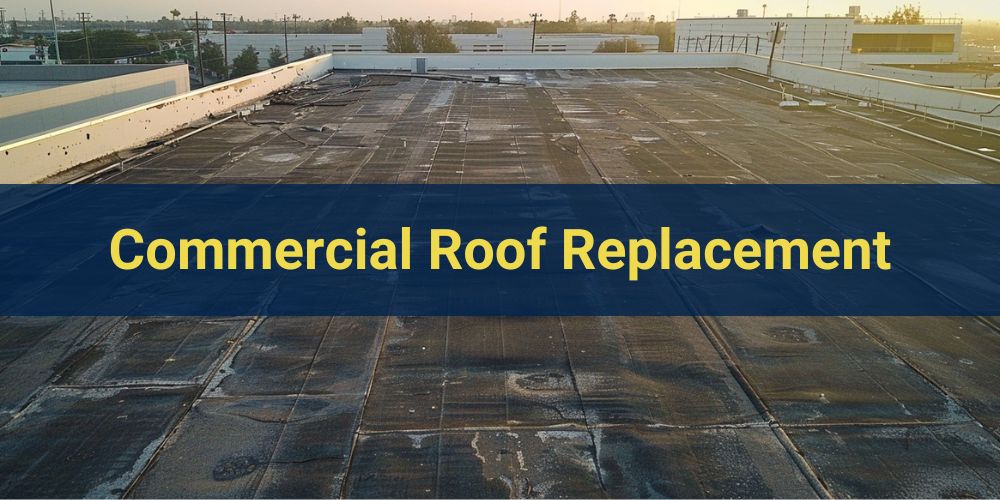
- Full Replacement: End-of-life performance under sustained environmental stress → ageing membranes, repeated repair history, widespread deterioration, loss of flexibility, corrosion, or full-system moisture saturation → complete commercial roof replacement is specified by Commercial Roofing Doral → a new roofing system is installed to meet current drainage, moisture, and uplift performance demands → recurring failures, operational disruption, and long-term cost escalation are eliminated.
Commercial Roofing Doral applies this decision framework to ensure that every roofing intervention is aligned with actual system condition and Doral-specific environmental exposure. By selecting repair, restoration, or replacement based on moisture behaviour, drainage performance, and storm resilience, commercial roofing systems remain watertight, structurally stable, and capable of protecting building operations under sustained humidity, rainfall, and wind uplift conditions.
When Is It Time to Assess a Commercial Roof in Doral?
A Doral commercial property should arrange a roof assessment when defects, moisture exposure, storm damage, drainage problems, or performance uncertainty begin to affect waterproofing reliability, roof stability, or building operations. Commercial roofing failure in Doral is rarely caused by one visible defect alone. It typically develops through combined system conditions such as membrane saturation, seam fatigue, flashing displacement, drainage restriction, wind-uplift stress, and moisture ingress across TPO, PVC, EPDM, metal, and modified bitumen roofing systems. In Doral, persistent humidity, high-volume rainfall, rapid drainage overload, rooftop equipment density, and hurricane-driven wind exposure accelerate these failure conditions. Left unaddressed, these factors increase the likelihood of trapped moisture, ponding water, seam separation, membrane movement, fastener loosening, flashing failure, and progressive system breakdown. As deterioration advances, isolated roof defects can transition into system-wide failure risks that can no longer be resolved through targeted repair alone. Commercial Roofing Doral evaluates roofing systems as complete assemblies, assessing membrane condition, saturation risk, seams, flashing interfaces, penetrations, rooftop equipment zones, drainage performance, attachment strength, and wind-exposed edges to determine whether defects are localised, spreading through the system, or indicative of end-of-life roof conditions. This allows repair, restoration, maintenance, or replacement decisions to be aligned with the actual performance state of the roof rather than surface-level symptoms. Engaging Commercial Roofing Doral at the point of early leak detection, recurring repair issues, ponding water, visible membrane damage, storm exposure, or uncertainty around system performance prevents escalation into concealed saturation, internal water damage, operational disruption, structural exposure, and premature full roof replacement. Delayed intervention increases repair complexity, expands moisture-affected zones, and raises long-term cost and risk across the building. If your Doral commercial property has active leaks, repeated repair history, ponding water, membrane damage, flashing defects, storm-related roof concerns, or uncertainty around whether the roof requires repair, restoration, or replacement, request a commercial roofing assessment from Commercial Roofing Doral to define the correct next step based on system condition, storm exposure, and building requirements.
Have a question about an upcoming commercial roofing project?