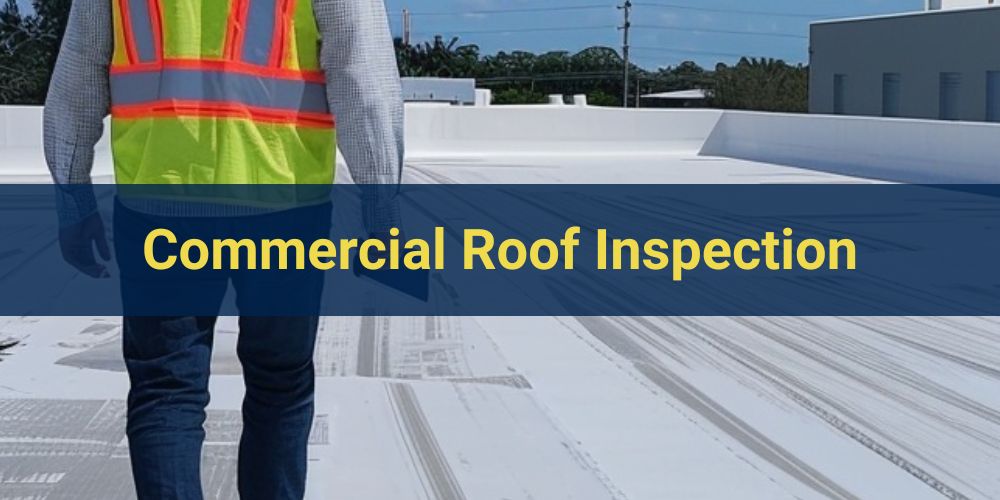
Commercial Roofing Doral provides commercial roof inspection services across Doral, Florida, for flat and low-slope commercial buildings that need roof condition assessment, leak-source identification, storm damage review, drainage evaluation, moisture-risk detection, and repair-or-replacement decision support. A commercial roof inspection is used to determine the actual condition of the roof assembly before repair, coating, restoration, partial replacement, or full commercial roof replacement is recommended. Commercial roof inspection is a diagnostic service, not a repair visit, coating application, or replacement proposal. Its purpose is to identify whether the roof remains serviceable, whether defects are isolated or spreading, whether moisture has entered concealed layers, whether drainage conditions are damaging the roof, and whether the existing system can still support targeted correction or restoration. Commercial Roofing Doral inspects commercial roofs so the next intervention is based on evidence, not visible symptoms alone.
In Doral, commercial roof inspections must account for frequent heavy rainfall, high humidity, intense sun exposure, hurricane-season wind pressure, rooftop HVAC activity, airborne debris, low-slope drainage sensitivity, and possible grease, exhaust, oil, or chemical exposure from restaurants, warehouses, logistics facilities, and industrial properties. These conditions can create seam failure, membrane wear, flashing movement, punctures, ponding water, clogged drains, uplift damage, corrosion, coating failure, and concealed moisture spread. Commercial Roofing Doral evaluates commercial roofs by inspecting roof system type, membrane or panel condition, seams, laps, flashings, penetrations, drains, scuppers, gutters, roof edges, rooftop equipment zones, prior repairs, coating condition, attachment stability, substrate condition, storm exposure, moisture indicators, and remaining service life. This allows the roof condition to be classified as repairable, maintainable, coating-suitable, restorable, partially replaceable, or replacement-ready.
Commercial roof inspection in Doral is used to identify roof condition, failure source, moisture risk, drainage behaviour, and the correct next roofing action.
- Leak-source identification → interior leak evidence is compared with seams, penetrations, drains, flashings, roof edges, punctures, coating defects, fasteners, or rooftop equipment zones → the likely water-entry point is isolated → repair work can target the true failure source → repeated patching and unresolved leaks are reduced.
- Storm and wind-uplift damage review → roof edges, corners, parapets, terminations, fasteners, plates, panels, membranes, flashings, and perimeter securement are checked for wind-related movement or displacement → uplift vulnerability is identified before further water entry develops → repair, reinforcement, partial replacement, or full replacement can be specified correctly.
- Drainage and ponding assessment → drains, scuppers, gutters, outlets, low points, debris accumulation, and water-retaining zones are reviewed under Doral rainfall conditions → drainage-related stress is separated from isolated roof defects → water-driven deterioration can be corrected before moisture spreads through the roof assembly.
- Moisture-risk and substrate condition review → soft areas, staining, blistering, wet insulation indicators, unstable substrate, deteriorated layers, and concealed moisture signs are assessed → inspection determines whether defects remain localised or have spread beneath the surface → coating or repair is avoided where trapped moisture or substrate failure requires broader intervention.
- Repair, coating, restoration, or replacement classification → roof system type, defect severity, moisture condition, drainage behaviour, storm damage, coating condition, attachment stability, and remaining service life are evaluated together → the roof is classified into the correct intervention pathway → Commercial Roofing Doral recommends the next step based on roof condition rather than assumption.
Commercial Roofing Doral performs commercial roof inspections as condition-based diagnostic work. By assessing leak sources, storm damage, drainage behaviour, moisture risk, system condition, rooftop equipment zones, and remaining service life, the inspection defines whether the roof should be repaired, maintained, coated, restored, partially replaced, or fully replaced.
What Problems Can a Commercial Roof Inspection Identify in Doral?
A commercial roof inspection in Doral can identify roof problems that are visible at the surface, developing around roof details, or spreading beneath the roofing assembly. Commercial Roofing Doral inspects flat and low-slope commercial roofs to locate active defects, early deterioration, storm-related damage, drainage restrictions, moisture indicators, rooftop equipment damage, coating failure, and conditions that determine whether the roof should be repaired, maintained, coated, restored, partially replaced, or fully replaced. In Doral, roof problems are often shaped by frequent heavy rainfall, high humidity, intense sun exposure, hurricane-season wind pressure, rooftop HVAC activity, airborne debris, low-slope drainage sensitivity, and possible grease, oil, exhaust, or chemical exposure from commercial operations. These conditions can make a small seam defect, flashing gap, puncture, blocked drain, coating split, or lifted perimeter detail develop into concealed saturation, recurring leaks, substrate damage, or full roof system failure if not inspected early.
The problems identified during a commercial roof inspection by Commercial Roofing Doral include:
- Active and potential leak sources → seams, laps, penetrations, drains, flashings, roof edges, fasteners, punctures, coating defects, and rooftop equipment zones are checked against interior leak evidence → the likely water-entry source is isolated → repair can target the actual defect instead of the visible symptom → repeat leaks and unnecessary patching are reduced.
- Storm, wind-uplift, and perimeter damage → corners, roof edges, parapets, terminations, fasteners, plates, panels, membranes, flashings, and securement points are inspected for lifted, loosened, displaced, torn, or stressed areas → storm-related vulnerability is separated from ordinary wear → reinforcement, repair, partial replacement, or full replacement can be specified where wind resistance has been compromised.
- Drainage restrictions and ponding water → drains, scuppers, gutters, outlets, low points, water-retaining areas, roof slope, debris accumulation, and rainfall flow paths are reviewed → water-retention stress is identified before it damages seams, membranes, coatings, flashings, insulation, or substrate layers → drainage correction can be paired with the correct roofing intervention.
- Moisture intrusion and concealed saturation risk → soft areas, staining, blistering, membrane distortion, coating bubbles, wet insulation indicators, damp substrate signs, and recurring interior leak patterns are assessed → inspection separates localised surface defects from water spread beneath the roof → coating or minor repair is avoided where partial replacement or full replacement is required.
- Membrane, coating, or panel deterioration → TPO, PVC, EPDM, modified bitumen, metal, foam, coated, or built-up roof surfaces are checked for cracking, brittleness, punctures, seam weakness, corrosion, coating wear, surface erosion, blistering, shrinkage, oxidation, or material fatigue → remaining serviceability is evaluated by roof system type → repair, restoration, coating, or replacement can be matched to the actual roof condition.
- Flashing, penetration, and rooftop equipment defects → HVAC curbs, exhaust units, vents, pipes, skylights, roof hatches, service lines, drains, parapets, equipment supports, and transition details are reviewed for open seams, loose terminations, cracked sealants, failed welds, movement stress, or water-entry points → high-risk detail failures are identified → equipment-zone leaks and repeated repair cycles are reduced.
- Failed repairs, incompatible materials, and coating breakdown → old patches, sealants, tie-ins, coating layers, repair edges, mixed materials, and prior restoration work are inspected for adhesion loss, cracking, edge failure, chemical incompatibility, trapped moisture, or recurring leak paths → inspection identifies whether previous work is still performing or has become part of the failure pattern → corrective work can remove the cause of repeated leaks.
- Exposure-related roof damage from commercial operations → restaurant exhaust, grease discharge, oil contamination, cleaning chemicals, industrial residue, condensate runoff, service traffic, and rooftop discharge areas are reviewed where relevant → contamination or chemical exposure is separated from ordinary roof ageing → cleaning, repair, coating selection, local replacement, or system replacement can be selected based on exposure severity.
- Attachment, substrate, and structural support concerns → loose attachment, fastener movement, soft decking, unstable cover boards, panel movement, uplift-prone zones, deteriorated layers, and substrate weakness are evaluated → inspection determines whether the roof has a stable base for repair or coating → broader restoration or replacement is recommended where the roof assembly can no longer support local correction.
- End-of-life roof conditions → repeated leaks, widespread deterioration, multi-zone moisture, severe brittleness, broad coating failure, widespread corrosion, failed attachment, storm damage, or unstable substrate are identified together → inspection confirms when the roof is no longer serviceable through repair or coating → partial replacement or full commercial roof replacement becomes the correct long-term recommendation.
Commercial Roofing Doral uses commercial roof inspection to identify both the visible roof problem and the condition behind it. By evaluating leak sources, storm exposure, drainage behaviour, moisture risk, system deterioration, rooftop equipment details, prior repairs, commercial contamination, substrate stability, and remaining service life, the inspection defines the correct roofing pathway before money is spent on repair, coating, restoration, partial replacement, or full replacement.
Have a question about an upcoming commercial roofing project?
How Does Commercial Roofing Doral Inspect Commercial Roofs?
Commercial Roofing Doral inspects commercial roofs through a structured condition-assessment process that identifies the roof system, traces visible and hidden failure patterns, evaluates moisture and drainage risk, reviews storm exposure, and classifies the correct next roofing action. The inspection is designed to determine whether the roof remains repairable, maintainable, coating-suitable, restorable, partially replaceable, or ready for full commercial roof replacement. In Doral, commercial roof inspection must account for frequent heavy rainfall, high humidity, intense sun exposure, hurricane-season wind pressure, rooftop HVAC activity, airborne debris, low-slope drainage sensitivity, and possible grease, oil, exhaust, or chemical exposure from commercial operations. These conditions influence how seams open, membranes age, coatings fail, drains clog, flashings move, perimeters lift, and moisture spreads beneath flat and low-slope roof systems.
The commercial roof inspection process by Commercial Roofing Doral includes:
- Building and roof history review → leak history, repair records, roof age, prior coating work, storm exposure, tenant complaints, rooftop equipment activity, drainage complaints, and recurring problem areas are reviewed before or during inspection → known symptoms are connected to possible roof failure sources → inspection effort is directed toward the areas most likely to explain current roof performance.
- Roof system identification → the existing roof is identified as TPO, PVC, EPDM, modified bitumen, metal, foam, built-up roofing, coated roofing, or another commercial roof assembly → inspection criteria are matched to the roof type → seams, laps, fasteners, coatings, flashings, membranes, panels, and substrates are evaluated according to their actual system behaviour.
- Exterior roof surface inspection → field areas are checked for punctures, cracks, blisters, splits, surface wear, coating breakdown, corrosion, membrane shrinkage, open laps, exposed reinforcement, soft areas, debris accumulation, and rooftop traffic damage → visible deterioration is separated from isolated wear → repair, coating, restoration, or replacement suitability can be assessed.
- Seams, laps, flashings, penetrations, and roof-edge review → high-risk junctions including seams, laps, parapets, roof edges, HVAC curbs, exhaust vents, pipes, drains, skylights, roof hatches, service lines, and terminations are checked for open details, loose materials, failed welds, cracked sealants, movement stress, or water-entry points → detail failures are isolated before they become repeated leak cycles.
- Drainage and ponding assessment → drains, scuppers, gutters, outlets, valleys, low points, slope conditions, debris build-up, water stains, and ponding zones are reviewed against Doral rainfall exposure → drainage restrictions are separated from roof material failure → water-retention problems can be corrected before they cause saturation, coating failure, seam fatigue, or substrate damage.
- Storm and wind-uplift review → corners, perimeters, parapets, terminations, membranes, panels, fasteners, plates, edge metal, flashing details, and attachment zones are inspected for lifted, loosened, displaced, torn, or stressed conditions → hurricane-season vulnerability is identified → repair, reinforcement, partial replacement, or full replacement can be recommended where wind resistance has been compromised.
- Moisture-risk and substrate assessment → soft spots, blistering, staining, membrane distortion, coating bubbles, damp indicators, wet insulation signs, deck movement, unstable cover boards, and recurring interior leak patterns are reviewed → inspection determines whether moisture is localised or spreading beneath the roof surface → coating and minor repair are avoided where trapped moisture or substrate instability requires broader correction.
- Rooftop equipment and contamination review → HVAC units, exhaust fans, condensate lines, grease discharge zones, service paths, equipment supports, restaurant exhaust areas, oil contamination, industrial residue, and chemical exposure points are inspected where relevant → equipment-driven damage and contamination are separated from normal ageing → repair method, coating compatibility, or replacement scope can be selected accurately.
- Prior repair and coating review → old patches, sealants, coatings, tie-ins, repair edges, incompatible materials, loose restoration layers, and previous leak repairs are checked for adhesion loss, cracking, trapped moisture, edge failure, or recurring water-entry paths → failed prior work is identified before new work is recommended → repeat patching is avoided where the old repair has become part of the defect.
- Repair, coating, restoration, or replacement recommendation → roof system type, defect severity, leak source, moisture condition, drainage behaviour, storm damage, substrate stability, coating condition, contamination risk, attachment performance, and remaining service life are evaluated together → the roof is classified into the correct next-action pathway → Commercial Roofing Doral recommends repair, maintenance, coating, restoration, partial replacement, or full commercial roof replacement based on roof condition rather than assumption.
Commercial Roofing Doral inspects commercial roofs to identify what is failing, why it is failing, how far the condition has spread, and which roofing action is justified. By reviewing roof history, system type, surface condition, details, drainage, storm exposure, moisture risk, rooftop equipment zones, prior repairs, and remaining service life, the inspection creates a clear basis for repair, coating, restoration, partial replacement, or full replacement.
Have a question about an upcoming commercial roofing project?
Why Choose Commercial Roofing Doral for Commercial Roof Inspection?
Commercial Roofing Doral is chosen for commercial roof inspection because inspection quality depends on identifying the true roof condition before recommending repair, coating, restoration, partial replacement, or full replacement. A commercial roof inspection should not simply confirm that damage is visible. It should determine where the roof is failing, why the failure is occurring, how far the condition has spread, and whether the roof still has enough system integrity to support targeted correction. In Doral, roof inspection requires local exposure awareness. Frequent heavy rainfall, high humidity, intense sun exposure, hurricane-season wind pressure, rooftop HVAC activity, airborne debris, low-slope drainage sensitivity, and possible grease, oil, exhaust, or chemical exposure can all change how a commercial roof deteriorates. Commercial Roofing Doral evaluates these conditions when inspecting seams, membranes, panels, flashings, penetrations, drains, roof edges, coatings, attachment points, substrate areas, and rooftop equipment zones. Commercial Roofing Doral is selected because the inspection is tied to decision accuracy. The roof is not automatically pushed toward repair, coating, restoration, or replacement. Instead, the inspection separates localised defects from concealed moisture, drainage-driven deterioration, storm-related movement, failed prior repairs, substrate instability, and end-of-life roof conditions. This helps prevent coating over trapped moisture, patching the wrong defect, restoring an unstable roof, or replacing a roof that still has viable service life. By treating commercial roof inspection as condition-based diagnosis, Commercial Roofing Doral helps Doral property owners understand the roof’s failure source, moisture risk, drainage behaviour, storm vulnerability, system condition, and correct next roofing action before committing budget to roof work.
Have a question about an upcoming commercial roofing project?
When Should a Doral Property Schedule a Commercial Roof Inspection?
A Doral commercial property should schedule a commercial roof inspection when there are active leaks, ceiling stains, recurring interior moisture signs, storm exposure, ponding water, visible roof deterioration, drainage concerns, rooftop equipment damage, or uncertainty about whether the roof requires repair, coating, restoration, partial replacement, or full replacement. A roof inspection should be used before committing to corrective work because the visible symptom may not show the true failure source or the full extent of moisture movement beneath the roof surface. In Doral, frequent heavy rainfall, high humidity, intense sun exposure, hurricane-season wind pressure, rooftop HVAC activity, airborne debris, low-slope drainage sensitivity, and possible grease, oil, exhaust, or chemical exposure can cause commercial roofs to deteriorate faster at seams, flashings, penetrations, drains, edges, coatings, panels, membranes, and equipment zones. Inspection is especially important after heavy rain, wind events, repeated leaks, blocked drainage, or unexplained ceiling damage because water can travel through concealed roof layers before appearing inside the building.
Commercial Roofing Doral should inspect the roof before commercial roof coating, roof repair, restoration, partial replacement, or full commercial roof replacement is selected. This ensures the roof is not coated over trapped moisture, patched at the wrong location, restored over unstable substrate, or replaced unnecessarily where targeted correction would still perform. Inspection also helps classify whether the roof remains maintainable, repairable, coating-suitable, restorable, partially replaceable, or replacement-ready. A commercial roof inspection is also useful before buying, leasing, refinancing, renewing insurance, planning capital improvements, budgeting for roof work, or taking over responsibility for a commercial property. The inspection can identify roof age concerns, prior repair quality, coating condition, drainage weaknesses, storm vulnerability, moisture risk, rooftop equipment damage, and remaining service life before those issues become unexpected operating costs. If your Doral commercial property has active roof leaks, ceiling stains, ponding water, clogged drains, damaged flashings, open seams, membrane wear, coating breakdown, corrosion, rooftop equipment damage, storm exposure, failed prior repairs, or uncertainty about the correct next roofing action, schedule a commercial roof inspection with Commercial Roofing Doral to define the roof condition, failure source, moisture risk, and most appropriate next step.