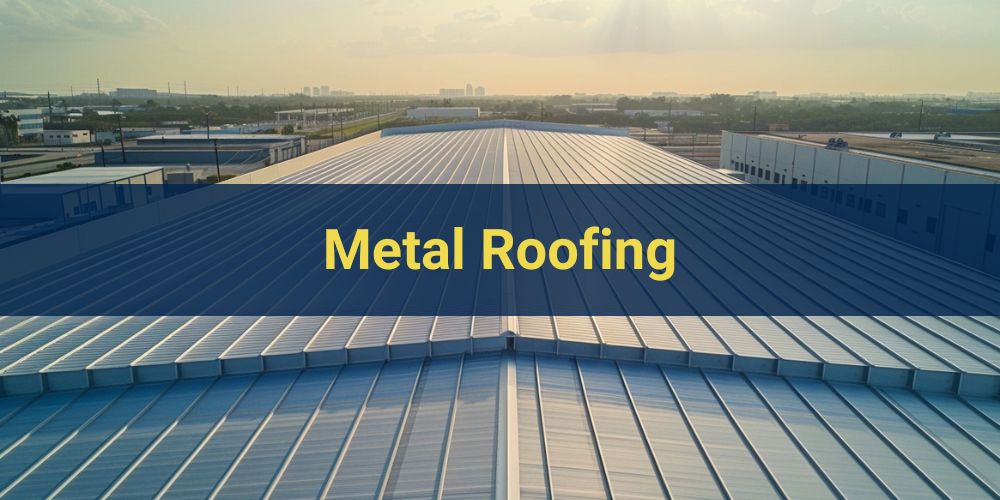
Commercial Roofing Doral provides metal roofing services across Doral, Florida, for commercial buildings that require durable panel-based roof systems, long-term weather resistance, structural stability, corrosion control, and serviceable roof performance. Commercial metal roofing is used on warehouses, industrial facilities, logistics buildings, retail properties, office buildings, and multi-tenant commercial structures where the roof system must perform under South Florida rainfall, humidity, sun exposure, wind pressure, and rooftop equipment activity. Commercial metal roofing is a distinct roof assembly, not a generic roof surface, coating system, or temporary repair category. Metal roof performance depends on panel condition, fastener stability, washer integrity, lap continuity, seam performance, flashing detail, penetration treatment, drainage behaviour, corrosion resistance, protective coating condition, attachment strength, and thermal movement. Commercial Roofing Doral repairs, restores, coats, maintains, and replaces metal roofing systems where the correct intervention can protect the building and extend roof service life.
In Doral, commercial metal roofs must be evaluated against frequent heavy rainfall, high humidity, intense sun exposure, hurricane-season wind pressure, salt-laden coastal air influence, rooftop HVAC activity, airborne debris, low-slope drainage sensitivity, and possible grease, oil, exhaust, or chemical exposure from commercial operations. These conditions can loosen fasteners, weaken sealing washers, open panel laps, stress flashings, accelerate corrosion, wear down protective finishes, restrict drainage, and create recurring water-entry points around roof edges, penetrations, equipment zones, and low areas. Commercial Roofing Doral evaluates metal roofing systems by identifying whether the roof condition is repairable, maintainable, restorable, coating-suitable, partially replaceable, or ready for full metal roof replacement. Localised fastener leaks, washer deterioration, lap separation, flashing defects, minor corrosion, coating wear, drainage issues, and limited panel damage may be repairable where the surrounding roof remains stable. Widespread corrosion, unstable panels, failed attachment, repeated leaks, severe coating loss, storm damage, structural deterioration, or end-of-life conditions may require restoration, metal roof coating, partial replacement, or full commercial metal roof replacement.
Metal roofing in Doral requires system-specific assessment because performance is controlled by panel condition, fastener integrity, lap continuity, corrosion resistance, flashing integration, drainage behaviour, wind-uplift resistance, and roof assembly stability.
- Fastener and washer performance → metal roof fasteners and sealing washers must maintain compression and attachment strength → heat movement, wind pressure, ageing, corrosion, and rainfall exposure can cause fasteners to loosen, back out, rust, or lose sealing pressure → fastener correction, washer replacement, resealing, reinforcement, or replacement may be required → point-entry leaks and attachment-related failure are reduced.
- Panel lap, seam, and joint continuity → metal roof panels rely on laps, seams, overlaps, and transitions to remain aligned and weather-resistant → wind movement, thermal expansion, poor drainage, ageing sealants, or panel distortion can open linear water-entry paths → lap sealing, seam reinforcement, mechanical correction, or local panel replacement may be required → recurring leaks along panel junctions are controlled.
- Corrosion and protective finish breakdown → humidity, rainfall, salt-influenced air, standing water, coating wear, exposed metal, scratches, and trapped debris can accelerate corrosion on commercial metal roofs → corrosion severity is assessed before repair or coating is selected → affected areas may be cleaned, treated, primed, coated, reinforced, or replaced → panel weakening and premature roof failure are reduced.
- Flashing, penetration, and rooftop equipment vulnerability → HVAC curbs, vents, pipes, exhaust units, drains, skylights, parapets, service lines, and roof edges interrupt the metal roof system → movement, service traffic, wind pressure, and rainfall exposure concentrate stress at these details → flashing repair, resealing, reinforcement, re-termination, or local replacement is required where details fail → recurring leaks around equipment and transitions are reduced.
- Wind-uplift, drainage, and storm exposure → hurricane-season wind pressure, heavy rainfall, blocked gutters, restricted outlets, low points, and water-retaining areas can stress panels, laps, fasteners, seams, flashings, and roof edges → attachment condition, drainage paths, and perimeter securement must be evaluated together → repair, reinforcement, restoration, coating, partial replacement, or full replacement is selected based on roof condition → storm-driven water entry and wind-related roof damage are controlled.
Commercial Roofing Doral delivers metal roofing services as system-specific commercial roofing work, not generic roof repair. By assessing panels, fasteners, washers, laps, seams, flashings, penetrations, corrosion, coating condition, drainage, wind-uplift risk, rooftop equipment zones, moisture presence, attachment stability, and remaining service life together, the correct metal roofing solution can be selected for each Doral commercial property.
What Metal Roofing Problems Does Commercial Roofing Doral Solve?
Commercial Roofing Doral solves metal roofing problems where the panel-and-fastener roof assembly has lost weather resistance at fasteners, washers, panel laps, seams, flashings, penetrations, roof edges, corrosion zones, drainage areas, rooftop equipment locations, or localised panel sections. Metal roof problems must be evaluated as assembly defects, not generic roof leaks, because repair reliability depends on panel condition, fastener stability, lap continuity, corrosion severity, flashing integration, drainage behaviour, attachment strength, and remaining service life. In Doral, metal roofing problems are often intensified by frequent heavy rainfall, high humidity, intense sun exposure, hurricane-season wind pressure, salt-influenced air, rooftop HVAC activity, airborne debris, low-slope drainage sensitivity, and possible grease, oil, exhaust, or chemical exposure from restaurants, warehouses, logistics facilities, and industrial properties. Commercial Roofing Doral determines whether each metal roof problem can be repaired, maintained, restored, coated, partially replaced, or whether full commercial metal roof replacement is required.
The metal roofing problems solved by Commercial Roofing Doral include:
- Fastener leaks and washer deterioration → heat movement, wind pressure, ageing, corrosion, or repeated rainfall causes fasteners to loosen, back out, rust, or lose sealing pressure at washers → water enters through fixing points across panels, laps, perimeter zones, and rooftop equipment areas → fasteners are replaced, re-secured, upgraded, resealed, or reinforced where appropriate → point-entry leaks, attachment weakness, and interior water damage are reduced.
- Panel lap, seam, and joint failure → wind movement, thermal expansion, poor drainage, panel distortion, ageing sealants, or storm exposure weakens overlaps between metal panels → laps and seams separate or lose weather resistance → affected joints are cleaned, sealed, reinforced, mechanically corrected, or locally replaced where the surrounding panels remain viable → linear water-entry pathways across the roof assembly are controlled.
- Flashing and penetration leaks → HVAC curbs, exhaust vents, pipes, drains, skylights, parapets, service lines, roof hatches, edge metal, and transition details interrupt the metal roof system → movement, wind pressure, rainfall exposure, and service activity weaken flashing continuity → failed details are resealed, reinforced, re-terminated, rebuilt, or locally replaced where required → recurring leaks around rooftop equipment and transitions are reduced.
- Corrosion and protective finish breakdown → high humidity, heavy rainfall, salt-influenced air, standing water, coating wear, exposed metal, scratches, trapped debris, or failed prior coatings allow corrosion to spread → panel strength, appearance, and weather resistance decline → corrosion is cleaned, treated, primed, coated, reinforced, or removed through local panel replacement depending on severity → structural weakening and premature metal roof failure are reduced.
- Loose, lifted, distorted, or damaged panels → hurricane-season wind pressure, poor attachment, impact damage, thermal cycling, substrate movement, or panel fatigue causes panels to lift, buckle, distort, misalign, or lose securement → water-entry risk increases at laps, seams, fasteners, roof edges, and flashings → affected panels are re-secured, realigned, reinforced, corrected, or locally replaced where viable → uplift risk, panel movement, and recurring leaks are controlled.
- Drainage restriction and ponding-related metal roof damage → blocked gutters, restricted outlets, clogged scuppers, debris accumulation, low points, valleys, or water-retaining areas hold water on or around metal roof details → standing water increases corrosion risk and stresses laps, fasteners, sealants, coatings, and panel edges → drainage paths are cleared, corrected, reinforced, or integrated into the repair or restoration scope → water-retention damage, corrosion progression, and repeated leak cycles are reduced.
- Storm, wind-uplift, and perimeter securement problems → wind pressure, storm movement, edge lift, displaced metal, loose terminations, weakened fasteners, or damaged perimeter details compromise the metal roof assembly → roof edges, corners, parapets, attachment points, and uplift-prone zones become vulnerable to water entry → affected areas are re-secured, reinforced, repaired, or locally replaced where the surrounding assembly remains stable → storm-driven roof damage and wind-related leak paths are controlled.
- Metal roof coating failure → worn coating, poor adhesion, oxidation beneath coating, thin coverage, blistering, UV exposure, ponding stress, or incompatible prior restoration reduces surface protection → metal panels become more vulnerable to heat, rainfall, corrosion, and surface deterioration → coating condition is assessed, failed areas are prepared, corrosion is treated, and compatible metal roof coating or restoration is applied where viable → surface protection and service life are extended without full replacement where panels remain stable.
- Rooftop equipment and service-area damage → HVAC servicing, exhaust units, condensate lines, vibration, technician access, tools, service paths, and equipment replacement work damage panels, fasteners, flashings, coatings, or sealants around high-use roof zones → equipment areas become recurring leak locations → damaged components are repaired, reinforced, protected, resealed, or locally replaced where required → equipment-zone leaks and repeated repair cycles are reduced.
- Grease, oil, exhaust, or chemical exposure → restaurant exhaust, grease discharge, industrial residue, cleaning chemicals, oil contamination, condensate runoff, or rooftop discharge affects metal panels, protective coatings, fasteners, sealants, and repair areas → contamination can accelerate coating breakdown, corrosion, adhesion failure, or surface deterioration → affected zones are cleaned, assessed, repaired, protected, coated, or locally replaced according to exposure severity → exposure-related roof deterioration is controlled.
- Failed prior metal roof repairs → old sealants, patches, coatings, fastener repairs, lap treatments, flashing corrections, or incompatible repair materials crack, lift, lose adhesion, trap moisture, or accelerate corrosion over time → failed repair zones become recurring leak sources → failed materials are removed or corrected with compatible metal roofing methods → repeat leaks caused by poor repair compatibility are reduced.
- End-of-life metal roof conditions → widespread corrosion, repeated leaks, unstable panels, failed attachment, severe coating loss, storm damage, structural deterioration, or multi-zone failure affects the roof beyond localised correction → continued repair or coating would only delay system failure → partial replacement or full commercial metal roof replacement is recommended where required → long-term weather resistance and roof assembly reliability are restored.
Commercial Roofing Doral solves metal roofing problems by separating repairable panel-and-fastener defects from wider roof system failure. Fastener leaks, washer deterioration, lap defects, flashing issues, localised corrosion, drainage problems, rooftop equipment damage, limited coating failure, and isolated panel damage may be corrected where the surrounding metal roof remains stable. Widespread corrosion, unstable attachment, repeated leaks, uplift damage, severe coating loss, structural deterioration, or end-of-life conditions require restoration, metal roof coating, partial replacement, or full commercial metal roof replacement.
Have a question about an upcoming commercial roofing project?
How Does Commercial Roofing Doral Diagnose Metal Roof Problems?
Commercial Roofing Doral diagnoses metal roof problems by tracing leaks, corrosion, panel movement, drainage stress, or storm damage back to the specific part of the panel-and-fastener roof assembly that is failing. Metal roof diagnosis must evaluate panels, fasteners, washers, laps, seams, flashings, penetrations, coating condition, corrosion zones, drainage paths, attachment strength, roof edges, rooftop equipment areas, and remaining service life before repair, restoration, coating, partial replacement, or full metal roof replacement is recommended. In Doral, metal roof diagnosis must account for frequent heavy rainfall, high humidity, intense sun exposure, hurricane-season wind pressure, salt-influenced air, rooftop HVAC activity, airborne debris, low-slope drainage sensitivity, and possible grease, oil, exhaust, or chemical exposure from commercial operations. These conditions affect how fasteners loosen, how washers fail, how panels move, how laps open, how corrosion spreads, how coatings break down, how water collects, and how perimeter zones respond to wind pressure.
Metal roof diagnosis by Commercial Roofing Doral includes:
- Fastener and washer inspection → screw lines, exposed fasteners, concealed attachment areas, washers, clips, plates, and perimeter fixings are checked for back-out, corrosion, compression loss, cracked washers, loosened attachment, or failed sealing pressure → point-entry leak sources are confirmed before repair begins → fastener replacement, washer correction, resealing, reinforcement, or attachment upgrade can be selected where the surrounding roof remains viable.
- Panel lap, seam, and joint evaluation → side laps, end laps, standing seams, overlaps, transitions, panel joints, ridge details, and repair edges are inspected for separation, distortion, failed sealant, corrosion, movement fatigue, or water-entry pathways → linear leak paths are separated from field-panel wear → lap sealing, seam reinforcement, mechanical correction, local panel replacement, restoration, or broader replacement can be specified accurately.
- Flashing, penetration, and roof-edge assessment → HVAC curbs, exhaust vents, pipes, drains, skylights, roof hatches, parapets, service lines, edge metal, terminations, valleys, and transition details are reviewed for loose metal, open joints, failed sealants, corrosion, movement stress, wind damage, or poor integration with the panel system → high-risk detail defects are isolated → flashing repair, resealing, reinforcement, re-termination, rebuilding, or local replacement can be selected.
- Corrosion and protective finish review → exposed metal, oxidation, rust spread, coating loss, scratches, edge corrosion, fastener corrosion, panel underside staining, failed prior coating, and water-retention damage are assessed across panels, laps, fasteners, gutters, valleys, and drainage areas → surface oxidation is separated from structural metal loss → cleaning, treatment, priming, coating, reinforcement, local panel replacement, or full replacement can be selected based on corrosion severity.
- Panel stability and attachment review → lifted panels, loose panels, buckling, oil-canning, distorted laps, displaced sheets, weakened clips, failed fasteners, substrate movement, and uplift-prone zones are evaluated → the roof’s ability to support local repair or restoration is confirmed → re-securement, panel correction, reinforcement, partial replacement, or full metal roof replacement is recommended where attachment or panel stability has been compromised.
- Drainage and ponding pattern assessment → gutters, scuppers, outlets, valleys, low points, roof slope, water-retaining zones, debris build-up, staining, and dust or residue accumulation are reviewed under Doral rainfall conditions → drainage-driven corrosion, lap stress, sealant fatigue, coating breakdown, and recurring leak patterns are identified → repair is paired with drainage correction where standing water or restricted flow is contributing to metal roof failure.
- Storm, wind-uplift, and perimeter securement review → corners, roof edges, parapets, terminations, edge metal, ridge areas, fasteners, clips, panels, seams, flashings, and uplift-prone zones are checked for lifted, loosened, displaced, torn, or stressed conditions → wind-related movement is separated from ordinary ageing → re-securement, reinforcement, partial replacement, or full replacement is recommended where storm exposure has compromised roof stability.
- Rooftop equipment and contamination review → HVAC units, exhaust fans, condensate lines, grease discharge zones, service paths, equipment supports, technician traffic areas, oil residue, industrial deposits, cleaning chemicals, and rooftop discharge points are reviewed where relevant → equipment-driven damage and contamination-related coating or corrosion risk are separated from normal metal roof ageing → cleaning, compatible repair, corrosion treatment, coating, local replacement, or broader restoration can be selected based on exposure severity.
- Moisture movement and interior leak correlation → ceiling stains, interior leak locations, insulation wetting, panel underside staining, rust trails, recurring drip points, and water travel patterns are compared with roof-level defects → visible interior symptoms are traced back to likely fasteners, seams, laps, flashings, penetrations, gutters, or rooftop equipment zones → targeted repair is used only where the failure source is contained → broader restoration or replacement is recommended where moisture spread indicates wider roof failure.
- Prior repair and coating compatibility review → old sealants, patches, coatings, fastener repairs, lap treatments, flashing repairs, incompatible materials, and failed restoration areas are inspected for cracking, lifting, adhesion loss, trapped moisture, corrosion beneath repairs, or recurring leak paths → failed repair zones are identified before new work is specified → incompatible materials are removed or corrected with metal-roof-compatible repair or restoration methods.
- Repair, restoration, coating, partial replacement, or full replacement classification → panel condition, fastener performance, washer integrity, lap continuity, flashing condition, corrosion depth, drainage behaviour, wind-uplift resistance, contamination exposure, moisture evidence, attachment stability, prior repair history, and remaining service life are evaluated together → the metal roof is classified into the correct intervention category → Commercial Roofing Doral recommends targeted repair where defects remain localised and restoration or replacement where the roof has moved beyond dependable local correction.
Commercial Roofing Doral uses metal roof diagnosis to identify whether the problem is a fastener leak, lap defect, flashing failure, corrosion issue, drainage-driven condition, wind-uplift concern, rooftop equipment problem, coating failure, or wider panel-and-fastener assembly failure. Where defects remain localised and the surrounding metal roof remains stable, repair, maintenance, coating, or restoration may be appropriate. Where corrosion is widespread, attachment has failed, panels are unstable, leaks are recurring across multiple zones, or storm damage has compromised roof stability, partial replacement or full commercial metal roof replacement becomes the correct path.
Have a question about an upcoming commercial roofing project?
How Does Commercial Roofing Doral Repair and Restore Metal Roofing?
Commercial Roofing Doral repairs and restores metal roofing by correcting the specific part of the panel-and-fastener roof assembly that is causing water entry, corrosion progression, panel movement, flashing failure, drainage stress, coating breakdown, or storm-related damage. Metal roof repair and restoration are appropriate where the panels, fasteners, attachment method, substrate, drainage paths, and roof details remain stable enough to support targeted correction, protective coating, or broader restoration without full replacement. In Doral, metal roof repair must account for frequent heavy rainfall, high humidity, intense sun exposure, hurricane-season wind pressure, salt-influenced air, rooftop HVAC activity, airborne debris, low-slope drainage sensitivity, and possible grease, oil, exhaust, or chemical exposure from commercial operations. These conditions affect fastener performance, washer compression, lap continuity, panel movement, corrosion risk, coating adhesion, flashing stability, drainage behaviour, and perimeter securement. Commercial Roofing Doral selects repair and restoration methods that correct the diagnosed failure source while protecting the wider metal roof assembly.
Metal roof repair and restoration by Commercial Roofing Doral includes:
- Fastener and washer correction → backed-out fasteners, failed washers, corroded screws, loose screw lines, weakened clips, open fixing points, or reduced sealing pressure are identified → affected fasteners are replaced, upgraded, re-secured, resealed, or reinforced where the surrounding panel system remains viable → point-entry water paths are closed → attachment weakness, washer failure, and interior leak risk are reduced.
- Panel lap, seam, and joint repair → side laps, end laps, standing seams, panel overlaps, ridge details, transitions, and repair edges are affected by movement, wind pressure, ageing sealants, corrosion, distortion, or drainage stress → laps and seams are cleaned, prepared, sealed, reinforced, mechanically corrected, or locally replaced where required → linear water-entry pathways are controlled → recurring leaks along metal panel junctions are reduced.
- Flashing, penetration, and roof-edge repair → HVAC curbs, exhaust vents, pipes, drains, skylights, roof hatches, parapets, service lines, edge metal, valleys, terminations, and transition details fail where movement, wind exposure, corrosion, or rainfall pressure concentrates stress → failed details are resealed, reinforced, re-terminated, rebuilt, or locally replaced as required → high-risk junctions regain weather resistance → recurring leaks around rooftop equipment, penetrations, and perimeter conditions are controlled.
- Corrosion treatment and protective finish restoration → oxidation, rust, exposed metal, coating loss, scratches, fastener corrosion, edge corrosion, underside staining, or water-retention damage is assessed for depth and spread → affected areas are cleaned, treated, primed, reinforced, coated, or removed through local panel replacement where required → corrosion progression is slowed or eliminated where the roof remains viable → panel weakening and premature metal roof failure are reduced.
- Panel re-securement and local panel replacement → loose panels, lifted sheets, buckled areas, distorted laps, oil-canning, displaced panels, damaged sections, weakened clips, or substrate-related movement are evaluated for repairability → panels are re-secured, realigned, reinforced, mechanically corrected, or locally replaced where the wider roof remains stable → panel movement and uplift vulnerability are reduced → water entry at laps, edges, fasteners, and flashings is controlled.
- Drainage and ponding correction → blocked gutters, restricted outlets, clogged scuppers, valley debris, low points, water-retaining zones, staining, or slow drainage are reviewed where standing water contributes to corrosion, coating failure, sealant fatigue, or lap leakage → drainage paths are cleared, corrected, reinforced, or integrated into the repair scope → repeated water pressure on panels, fasteners, seams, coatings, and flashings is reduced → rainfall-driven leak and corrosion cycles are controlled.
- Storm and wind-uplift securement correction → lifted edges, displaced metal, loosened panels, stressed fasteners, damaged clips, opened terminations, torn flashings, ridge movement, or uplift-prone perimeter zones are corrected where storm pressure has compromised roof stability → vulnerable areas are re-secured, reinforced, repaired, or locally replaced where the surrounding assembly remains viable → wind-related movement and stress transfer into laps, seams, and flashings are reduced → storm-driven water entry is controlled.
- Rooftop equipment and contamination-area repair → HVAC units, exhaust fans, condensate lines, service paths, grease discharge zones, oil contamination, industrial residue, cleaning chemical exposure, equipment supports, and technician traffic areas are reviewed where they have damaged panels, coatings, fasteners, flashings, sealants, or repair areas → contaminated or worn zones are cleaned, repaired, protected, reinforced, treated, coated, or locally replaced where required → equipment-zone deterioration and exposure-related leak paths are reduced → repeat repair cycles are controlled.
- Metal roof coating or restoration where panels remain viable → ageing but stable metal roofs with surface oxidation, coating wear, minor corrosion, fastener-line vulnerability, lap sealant deterioration, or weathered protective finishes are assessed for restoration suitability → defects are corrected, corrosion is treated, and compatible metal roof coating is applied where appropriate → surface protection, corrosion resistance, and weather performance are renewed → full replacement is deferred where the metal roof remains structurally sound.
- Replacement escalation where repair or restoration is no longer reliable → widespread corrosion, repeated leaks, unstable panels, failed attachment, severe coating loss, storm damage, structural deterioration, multi-zone water entry, or substrate instability shows that the metal roof is no longer locally repairable → partial replacement or full commercial metal roof replacement is recommended instead of continued patching or coating → the failed panel-and-fastener assembly is renewed at the correct scope → long-term weather resistance and roof reliability are restored.
Commercial Roofing Doral repairs and restores metal roofing by matching each intervention to the diagnosed roof condition, panel stability, fastener performance, washer integrity, lap continuity, flashing condition, corrosion severity, drainage behaviour, wind-uplift risk, coating viability, contamination exposure, attachment strength, and remaining service life. This ensures fastener leaks, lap defects, flashing failures, corrosion, coating breakdown, drainage issues, rooftop equipment damage, storm-related movement, and localised panel failures are corrected where the metal roof remains viable, while broader restoration, partial replacement, or full replacement is recommended where the system has moved beyond dependable repair or restoration.
Have a question about an upcoming commercial roofing project?
When Does a Metal Roof Need Replacement in Doral?
A metal roof needs replacement in Doral when the panel-and-fastener assembly can no longer provide dependable weather resistance through repair, maintenance, coating, restoration, or partial correction. Replacement becomes necessary when failure is distributed across panels, fasteners, washers, laps, seams, flashings, penetrations, drainage zones, roof edges, attachment points, or structural support areas rather than remaining limited to one repairable defect. Commercial Roofing Doral separates replacement conditions from repairable metal roof defects by evaluating panel stability, fastener performance, washer condition, lap continuity, seam integrity, flashing performance, corrosion depth, protective coating viability, drainage behaviour, wind-uplift resistance, perimeter securement, substrate condition, storm damage, rooftop equipment impact, contamination exposure, prior repair history, and remaining service life. This ensures metal roof replacement is recommended only where the existing roof has moved beyond a dependable repair or restoration range.
Commercial metal roof replacement is required under the following conditions:
- Widespread corrosion or metal loss → rust, oxidation, coating loss, exposed metal, edge corrosion, fastener corrosion, panel thinning, or structural metal loss appears across multiple roof areas → local treatment or coating can no longer restore metal integrity → partial replacement or full commercial metal roof replacement removes compromised material at the correct scope → panel strength, weather resistance, and long-term roof reliability are restored.
- Repeated leaks across multiple panel zones → water entry appears at fasteners, washers, laps, seams, flashings, penetrations, roof edges, gutters, coating defects, equipment areas, or panel transitions in different sections of the roof → the roof is failing as a connected panel-and-fastener assembly rather than through one localised defect → continued patching creates short repair cycles → replacement restores continuous weather protection across the affected roof system.
- Failed fastener or attachment system → fasteners have lost holding power, washers have failed broadly, clips or plates are weakened, screw lines are unreliable, panels are no longer securely attached, or the substrate can no longer support secure fastening → coating or resealing cannot restore mechanical attachment performance → replacement rebuilds the attachment condition at the correct scope → wind movement, panel displacement, and recurring leak risk are controlled.
- Unstable, lifted, buckled, or distorted panels → panels are loose, uplifted, misaligned, buckled, oil-canned, impact-damaged, displaced, or no longer seated correctly within the roof assembly → local repair cannot restore dependable panel geometry where movement or distortion is distributed → partial replacement or full metal roof replacement renews the failed panel areas → open laps, edge movement, uplift vulnerability, and recurring water entry are reduced.
- Storm, wind-uplift, or perimeter securement failure → hurricane-season wind pressure has lifted edges, damaged terminations, displaced metal, loosened panels, stressed fasteners, opened seams, damaged ridge areas, or compromised perimeter securement across multiple roof zones → local repair cannot restore system-wide wind resistance where securement failure has spread → replacement rebuilds roof edges, attachment, panels, flashings, and weatherproofing continuity → future storm-driven water entry risk is reduced.
- Drainage-related metal roof assembly damage → heavy rainfall, blocked gutters, restricted outlets, clogged scuppers, low points, valleys, debris accumulation, or water-retaining areas have caused corrosion spread, seam fatigue, coating failure, fastener deterioration, panel edge damage, or recurring water entry → repair will not hold where water-driven deterioration has spread through the assembly → replacement allows compromised panels, drainage details, and affected transitions to be corrected together → rainfall-driven deterioration is reduced.
- Metal roof coating or restoration is no longer viable → coating failure, poor adhesion, corrosion beneath coating, severe finish loss, repeated sealant failure, unstable panels, broad fastener-line deterioration, or multi-zone leakage shows that restoration cannot provide dependable performance → recoating would delay necessary renewal rather than restore the roof → partial or full commercial metal roof replacement becomes the correct intervention → long-term weather resistance and asset protection are restored.
- Structural or substrate deterioration → roof deck movement, weakened framing, soft support areas, deteriorated substrate, failed attachment base, or unstable underlying conditions prevent reliable metal roof performance → local panel repair or coating cannot correct the support failure beneath the roof → structural correction, partial replacement, or full replacement is required before the roof can perform dependably → premature failure of future repair or restoration work is avoided.
- Contamination or exposure damage beyond local correction → grease discharge, exhaust residue, oil contamination, industrial runoff, cleaning chemicals, condensate discharge, or rooftop service exposure has damaged protective finishes, sealants, fasteners, coatings, panel surfaces, or repair areas beyond a contained zone → cleaning and local repair cannot restore dependable metal roof performance where exposure damage is distributed → partial replacement or full replacement renews the affected assembly → exposure-related corrosion and leak recurrence are controlled.
- End-of-life metal roof condition → widespread corrosion, repeated leaks, unstable panels, failed attachment, severe coating loss, storm damage, structural deterioration, recurring failed repairs, or multi-zone water entry shows that the roof can no longer function reliably → continued patching or coating would delay necessary renewal → partial or full commercial metal roof replacement becomes the correct long-term solution → the building receives a metal roof system matched to current exposure, drainage, wind, use, and performance requirements.
Commercial Roofing Doral determines whether a metal roof requires partial replacement or full replacement by assessing how far the failure has spread across the panel-and-fastener assembly. Localised fastener leaks, washer deterioration, lap defects, flashing issues, minor corrosion, coating wear, or isolated panel damage may still be repairable where the surrounding metal roof remains stable. Widespread corrosion, attachment failure, unstable panels, repeated multi-zone leaks, storm damage, substrate deterioration, failed restoration, or end-of-life conditions require broader replacement at the correct scope.
Why Choose Commercial Roofing Doral for Metal Roofing?
Commercial Roofing Doral is chosen for metal roofing because commercial metal roof performance depends on understanding the roof as a panel-and-fastener assembly, not as a generic roof surface. Panels, fasteners, washers, laps, seams, flashings, penetrations, coating condition, corrosion zones, drainage paths, roof edges, attachment points, and rooftop equipment areas must be evaluated together before repair, restoration, coating, partial replacement, or full metal roof replacement is recommended. In Doral, metal roofing requires local exposure judgement because frequent heavy rainfall, high humidity, intense sun exposure, hurricane-season wind pressure, salt-influenced air, rooftop HVAC activity, airborne debris, low-slope drainage sensitivity, and possible grease, oil, exhaust, or chemical exposure can all affect how a metal roof ages and fails. Commercial Roofing Doral accounts for these conditions when reviewing fastener movement, washer failure, lap separation, corrosion depth, coating breakdown, flashing stress, drainage restriction, panel movement, perimeter securement, and storm-related roof damage.
Commercial Roofing Doral is selected because metal roofing work is kept inside the correct intervention boundary. Targeted repair is recommended where fastener leaks, washer deterioration, lap defects, flashing issues, minor corrosion, coating wear, drainage concerns, equipment-zone damage, or isolated panel issues remain localised and the surrounding roof assembly is stable. Broader restoration, metal roof coating, partial replacement, or full commercial metal roof replacement is recommended where corrosion is widespread, panels are unstable, attachment has failed, storm damage has spread, repeated leaks affect multiple roof zones, or the roof has reached end-of-life condition. By matching each metal roofing solution to the actual condition of the panel-and-fastener assembly, Commercial Roofing Doral helps Doral commercial properties control point-entry leaks, reduce corrosion progression, restore lap and flashing continuity, protect rooftop equipment details, improve drainage-related performance, account for wind-uplift exposure, and extend service life where the existing metal roof remains viable.
When Should a Doral Property Request Metal Roofing Service?
A Doral commercial property should request metal roofing service when a commercial metal roof is showing fastener leaks, washer deterioration, panel lap separation, seam leakage, flashing defects, corrosion, coating breakdown, drainage-related damage, storm movement, loose panels, or rooftop equipment damage. Metal roofing issues should be assessed early because small point-entry defects can develop into recurring leaks, corrosion spread, panel instability, failed attachment, and wider roof system failure. In Doral, frequent heavy rainfall, high humidity, intense sun exposure, hurricane-season wind pressure, salt-influenced air, rooftop HVAC activity, airborne debris, low-slope drainage sensitivity, and possible grease, oil, exhaust, or chemical exposure can accelerate metal roof deterioration. Fasteners, washers, panel laps, seams, flashings, penetrations, gutters, valleys, roof edges, coating surfaces, corrosion zones, and rooftop equipment areas should be reviewed before local defects progress into widespread corrosion, uplift damage, drainage-related deterioration, or full metal roof replacement conditions.
Commercial Roofing Doral evaluates metal roofing service requests by assessing panel condition, fastener stability, washer integrity, lap continuity, seam performance, flashing detail, penetration treatment, corrosion depth, protective coating condition, drainage behaviour, wind-uplift resistance, perimeter securement, rooftop equipment exposure, contamination risk, attachment stability, prior repair performance, and remaining service life. This determines whether the correct next step is metal roof repair, maintenance, restoration, coating, partial replacement, or full commercial metal roof replacement. If your Doral commercial property has active metal roof leaks, backed-out fasteners, failed washers, open laps, seam defects, flashing leaks, corrosion, coating failure, ponding water, blocked gutters, storm-related movement, loose panels, rooftop equipment damage, grease or chemical exposure problems, failed prior repairs, or uncertainty around whether the roof needs repair, restoration, coating, partial replacement, or full replacement, request metal roofing service from Commercial Roofing Doral to define the correct solution based on roof condition and long-term building protection.
Have a question about an upcoming commercial roofing project?