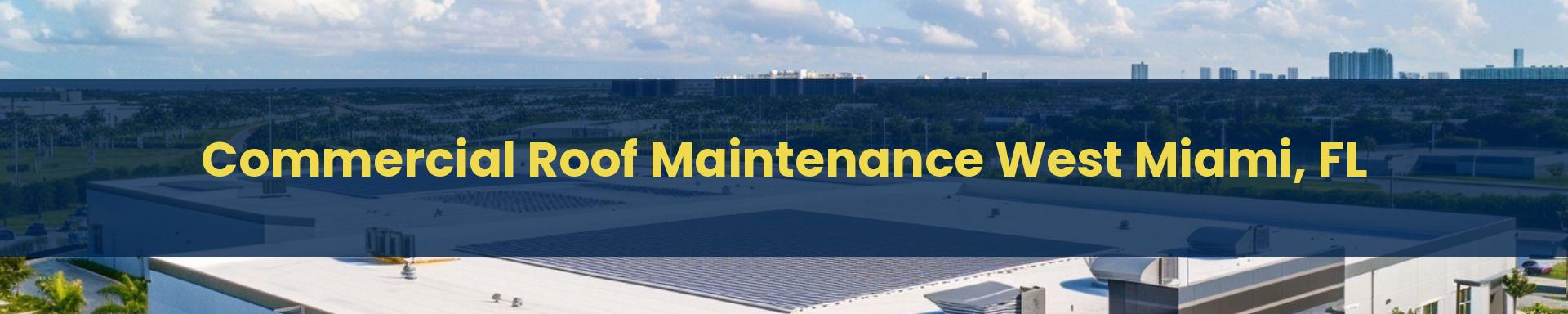
Commercial Roofing Doral delivers system-led commercial roof maintenance in West Miami, Florida by inspecting, cleaning, documenting, and correcting early-stage roof deterioration before minor roof conditions become active leaks, saturated insulation, restaurant disruption, tenant complaints, warranty complications, emergency repair, or premature roof replacement risk. Commercial Roofing Doral maintains commercial roof systems on neighborhood retail buildings, office properties, medical and service-based facilities, restaurant and hospitality-support properties, multifamily structures, mixed-use buildings, compact commercial assets, light industrial facilities, warehouse-style buildings, and other commercial roofs where Miami-Dade County hurricane exposure, wind-driven rain, subtropical humidity, South Florida UV load, salt-air influence, Coral Way and Southwest 8th Street commercial activity, compact municipal roof layouts, tenant-facing roof routes, restaurant exhaust exposure, rooftop equipment traffic, low-slope drainage sensitivity, flashing fatigue, seam movement, coating decline, and repeated occupied-property access can gradually weaken membranes, seams, flashings, penetrations, drains, scuppers, coatings, fasteners, metal details, and rooftop equipment interfaces.
The West Miami-specific maintenance outcomes below show how commercial roof maintenance is converted into scheduled roof inspection, drainage control, membrane upkeep, flashing continuity, rooftop equipment protection, coating review, metal roof monitoring, storm-season readiness, and documented lifecycle planning across Coral Way-facing commercial properties, Southwest 8th Street roof sections, compact retail and office layouts, restaurant-service roof zones, medical and service buildings, multifamily roof systems, tenant-access paths, South Florida humidity, hurricane-season rainfall, wind-uplift exposure, municipal drainage constraints, and Miami-Dade compact low-slope roof conditions.
- Commercial roof maintenance inspections in West Miami → membrane wear, seam stress, flashing movement, penetration conditions, drain performance, scupper function, edge details, rooftop equipment zones, coating condition, fastener movement, Coral Way-facing roof sections, Southwest 8th Street service routes, tenant-access wear, restaurant exhaust zones, medical-property roof areas, and humidity-related deterioration are reviewed against actual roof behaviour → maintenance findings identify early roof-system risk before defects become active leaks, saturated insulation, tenant disruption, restaurant interruption, medical-property disruption, occupied-space damage, or replacement-level failure.
- Preventive commercial roof maintenance for West Miami properties → minor punctures, open seams, sealant gaps, flashing weakness, loose components, early membrane fatigue, coating wear, wind-driven rain exposure, salt-air material stress, rooftop traffic marks, tenant-route abrasion, restaurant-service residue, Coral Way frontage stress, Southwest 8th Street debris exposure, compact perimeter wear, and equipment-zone deterioration are corrected while the roof remains serviceable → preventive maintenance protects remaining roof life and reduces the chance of emergency repair after hurricane-season rainfall, South Florida UV exposure, humidity cycles, or repeated occupied-property roof use.
- Roof drainage maintenance and ponding prevention in West Miami → drains, scuppers, gutters, downspouts, strainers, overflow routes, low spots, slow-draining areas, tenant-area discharge points, restaurant-service runoff paths, Coral Way drainage exposure, Southwest 8th Street debris points, compact roof transitions, municipal runoff constraints, and roof-surface obstruction areas are cleaned, checked, and documented where tropical rainfall, windborne debris, salt-air residue, leaves, loose materials, restaurant-service residue, and compact roof geometry can restrict water movement → drainage maintenance helps prevent ponding water, membrane fatigue, wet insulation, interior staining, tenant complaints, restaurant disruption, and recurring leak risk.
- Membrane, seam, and joint maintenance for West Miami commercial roofs → TPO, PVC, EPDM, modified bitumen, built-up roofing, coated roof surfaces, welded seams, adhered laps, expansion joints, control joints, terminations, roof-to-wall transitions, low-slope membrane fields, restaurant-service roof areas, Coral Way-facing roof sections, Southwest 8th Street commercial roof edges, medical-property roof zones, and compact commercial roof areas are reviewed for UV ageing, humidity exposure, storm-season wetting, cracking, shrinkage, blistering, punctures, lifting, adhesion loss, and localized material fatigue → maintenance preserves waterproofing continuity before surface wear or movement becomes repair-level failure.
- Flashing, penetration, and rooftop equipment-area maintenance in West Miami → parapets, curbs, walls, vents, skylights, drains, scuppers, HVAC units, restaurant exhaust penetrations, service platforms, pipe supports, conduit runs, equipment curbs, tenant-adjacent access zones, restaurant-service roof routes, medical-property service routes, Coral Way-facing perimeter details, Southwest 8th Street commercial edges, compact office roof sections, and mechanical penetrations are checked where wind-driven rain, humidity, salt-air exposure, rooftop service activity, restaurant exhaust conditions, equipment vibration, ageing sealant, and occupied-property access can weaken interface details → maintenance stabilizes the roof zones where repeated water-entry paths commonly begin.
- Maintenance documentation and roof lifecycle planning for West Miami buildings → roof condition findings, photo evidence, completed maintenance notes, drainage observations, coating condition, metal roof checks, equipment-zone findings, Coral Way exposure notes, Southwest 8th Street frontage observations, tenant-route records, restaurant-service findings, medical-property service observations, compact drainage notes, storm-readiness items, defect priorities, repair recommendations, and lifecycle records are documented for owners, property managers, facility teams, insurers, tenants, restaurant operators, medical-property stakeholders, retail managers, multifamily managers, office users, and asset-planning requirements → documented maintenance supports budgeting, warranty review, insurance records, repair timing, hurricane-season planning, occupied-property coordination, and long-term commercial roof management.
What Commercial Roof Maintenance Services Do We Provide In West Miami, Florida?
Commercial Roofing Doral delivers system-led commercial roof maintenance across Doral and Miami-Dade County by inspecting, documenting, cleaning, reinforcing, correcting, and preserving commercial roof systems before minor deterioration becomes active leakage, saturated insulation, emergency repair, or premature replacement. Commercial Roofing Doral maintains roof systems on warehouses, logistics facilities, distribution centers, industrial buildings, retail centers, office properties, multifamily buildings, hospitality assets, airport-adjacent service facilities, and other commercial properties where large low-slope roof fields, freight activity, rooftop mechanical density, loading-zone drainage pressure, hurricane-season rainfall, wind uplift, wind-driven rain, high humidity, UV intensity, salt-air influence, and Florida Building Code performance expectations place continuous stress on seams, flashings, drains, scuppers, penetrations, coatings, edge metal, and rooftop equipment interfaces.
Commercial roof maintenance in Doral is not just routine cleaning or visual checking. It is a structured roof-preservation program built around waterproofing continuity, drainage behaviour, membrane condition, flashing integrity, rooftop equipment detailing, uplift-sensitive edges, substrate risk, coating condition, storm-readiness, occupancy exposure, and remaining service life. This gives commercial property owners a clear pathway for keeping the roof maintainable, reducing avoidable leak events, extending serviceable roof life, and identifying when a condition has moved from maintenance into repair, restoration, coating, or replacement planning.
- Commercial Roof Inspection: maintenance-led condition assessment that checks membrane fields, seams, flashings, penetrations, drains, scuppers, gutters, edge metal, coatings, rooftop equipment curbs, walk paths, and storm-exposed details before hurricane rainfall, wind-driven rain, rooftop traffic, or prolonged humidity turns early deterioration into active roof failure.
- Drainage Maintenance: clearing and checking roof drains, scuppers, gutters, strainers, downspouts, overflow routes, ponding-prone areas, loading-zone runoff paths, and debris collection points so heavy Miami-Dade rainfall can leave the roof without accelerating membrane fatigue, wet insulation, interior staining, or repeat leak behaviour.
- Seam And Lap Review: maintenance review of TPO, PVC, EPDM, modified bitumen, built-up roofing, and coated roof seams where heat cycling, wind uplift, rooftop traffic, ageing adhesives, weld stress, or storm-season wetting can create early openings that should be corrected before water enters the roof assembly.
- Flashing And Penetration Maintenance: checking and maintaining parapet flashings, curb flashings, wall transitions, pipe penetrations, vents, skylights, service entries, HVAC curbs, conduit runs, exhaust points, and roof-to-wall interfaces where wind-driven rain and building movement commonly create leak-prone openings.
- Rooftop Equipment Area Maintenance: inspection and upkeep around HVAC units, pipe supports, service platforms, mechanical curbs, exhaust systems, conduit runs, walk pads, and access routes where vibration, service traffic, compression, poor detailing, and repeated technician movement can damage membranes and flashing details.
- Membrane Surface Maintenance: monitoring punctures, abrasions, blistering, cracking, shrinkage, loose laps, coating wear, surface contamination, debris damage, and UV-related ageing across low-slope commercial roof fields so small defects can be corrected before they become repair-level or replacement-level failures.
- Commercial Metal Roof Maintenance: maintenance of metal roof panels, fasteners, seams, sealant lines, laps, edge details, corrosion-prone areas, penetrations, and expansion joints so wind uplift, storm-driven rain, heat movement, and long-term metal fatigue do not create uncontrolled water-entry points.
- Built-Up Roof Maintenance: upkeep of multi-layer asphalt roof assemblies by reviewing surfacing condition, blisters, splits, ponding areas, flashings, drains, perimeter details, and roof traffic zones where repeated rainfall, standing water, and service use can weaken layered waterproofing protection.
- Modified Bitumen Roof Maintenance: maintenance of reinforced asphalt membrane systems by checking seams, laps, granule loss, punctures, surface cracks, flashing transitions, drainage paths, and rooftop equipment zones exposed to storm rainfall, heat cycling, debris, and operational roof traffic.
- TPO Commercial Roof Maintenance: preservation of reflective thermoplastic roof systems through seam checks, weld review, membrane cleaning, puncture correction, drainage monitoring, flashing inspection, and rooftop equipment-area maintenance to protect watertight performance across warehouse, retail, office, and logistics roof areas.
- PVC Commercial Roof Maintenance: maintenance of welded PVC roof systems by reviewing seams, chemical-exposure areas, grease-sensitive zones, penetrations, service routes, drainage transitions, and equipment interfaces where repeated roof access and operational exposure can compromise waterproofing continuity.
- EPDM Commercial Roof Maintenance: upkeep of flexible membrane roof systems by checking seams, adhesive condition, shrinkage, punctures, flashing transitions, perimeter details, ballast or surface conditions, and movement-sensitive areas before heat, wind, and building movement create active leak paths.
- Commercial Roof Coating Maintenance: evaluation of coated roof surfaces for adhesion loss, chalking, cracking, thin areas, ponding exposure, UV degradation, edge separation, and surface contamination so the coating system can continue protecting the underlying roof rather than concealing developing defects.
- Storm-Readiness Maintenance: pre-storm and post-storm roof review focused on debris removal, drain clearance, edge-metal condition, loose flashing, membrane openings, rooftop equipment security, ponding areas, and uplift-sensitive details before or after Miami-Dade hurricane-season weather events.
- Minor Corrective Maintenance: small, documented corrections to maintainable roof defects, including clearing blockages, resealing vulnerable details, tightening loose components, correcting minor membrane damage, addressing early coating wear, and stabilizing roof areas before the condition escalates into full commercial roof repair.
- Maintenance Documentation And Roof Planning: photo-based reporting of roof condition, drainage performance, membrane wear, flashing status, equipment-zone stress, storm-related observations, completed maintenance items, emerging repair needs, coating opportunities, restoration timing, and replacement risk so property managers can budget from evidence rather than guesswork.
For Doral commercial properties, the goal of commercial roof maintenance is to keep the roof serviceable for as long as the assembly remains viable. Commercial Roofing Doral evaluates whether each roof condition can be maintained, requires targeted repair, is suitable for restoration or coating, or has reached replacement planning, giving owners and property managers a clear maintenance strategy built around roof performance, building use, storm exposure, drainage behaviour, equipment layout, occupancy risk, and long-term lifecycle value.
Have a question about commercial roof maintenance?
When Does A West Miami Commercial Roof Need Maintenance Before Coral Way Or Southwest 8th Street Roof Stress Becomes Repair Work?
Commercial roof maintenance in West Miami is required when a commercial roof system remains serviceable, but early deterioration, drainage behaviour, rooftop equipment use, tenant-facing roof access, restaurant exhaust exposure, medical-property service routes, Coral Way frontage conditions, Southwest 8th Street commercial activity, compact municipal roof geometry, or hurricane-season roof stress shows that scheduled upkeep is needed before minor roof conditions become active leaks, saturated insulation, emergency repair, tenant complaints, restaurant interruption, medical-property disruption, occupied-space damage, warranty issues, or premature roof replacement. Across West Miami commercial properties, including neighborhood retail buildings, office properties, medical and service-based facilities, restaurant and hospitality-support properties, multifamily structures, mixed-use buildings, compact commercial assets, light industrial facilities, warehouse-style buildings, and other commercial roofs, maintenance becomes necessary where Miami-Dade County hurricane exposure, wind-driven rain, subtropical humidity, South Florida UV load, salt-air influence, Coral Way and Southwest 8th Street commercial movement, low-slope drainage sensitivity, rooftop service traffic, compact runoff pressure, tenant-route wear, restaurant-service residue, and repeated occupied-property access are gradually stressing membranes, seams, flashings, penetrations, drains, scuppers, coatings, fasteners, metal details, and rooftop equipment interfaces.
The West Miami-specific maintenance triggers below identify when commercial roof maintenance should be scheduled before small roof conditions become leak events, repair work, occupied-space disruption, or replacement-level failures.
- The roof remains serviceable but membrane wear is beginning to appear. UV ageing, surface dulling, coating wear, small punctures, minor cracking, blistering, shrinkage, adhesion loss, rooftop traffic marks, tenant-route abrasion, restaurant-service residue, Coral Way frontage stress, Southwest 8th Street debris exposure, storm-season wetting, salt-air material fatigue, or localized membrane wear should be maintained before South Florida exposure turns surface deterioration into seam failure, water-entry risk, or larger repair scope.
- Wind-driven rain is starting to test compact retail, restaurant, and medical roof interfaces. Parapets, wall transitions, roof edges, curbs, vents, skylights, service entries, tenant-adjacent access zones, restaurant-service roof routes, medical-property service routes, Coral Way-facing perimeter details, Southwest 8th Street commercial edges, compact office roof sections, warehouse-style roof areas, and rooftop equipment details need maintenance when storm-season rain pressure, humidity, ageing sealant, restaurant exhaust exposure, vibration, service activity, or building movement begins weakening waterproofing continuity around transition zones.
- Drainage points are slowing after tropical rainfall, compact runoff, or corridor debris buildup. Drains, scuppers, gutters, downspouts, strainers, overflow routes, low spots, slow-draining areas, tenant-area discharge points, restaurant-service runoff paths, Coral Way drainage exposure, Southwest 8th Street debris points, compact roof transitions, municipal runoff constraints, medical-property discharge routes, and roof-surface obstruction areas should be maintained when heavy rainfall, windborne debris, salt-air residue, leaves, loose material, restaurant-service residue, compact roof geometry, or storm washdown starts restricting water movement. Routine drainage maintenance helps prevent ponding water, membrane fatigue, wet insulation, interior staining, tenant complaints, restaurant interruption, medical-property disruption, and recurring leak behaviour.
- Humidity, salt-air exposure, restaurant residue, and repeated roof access are weakening metal, sealant, or coating performance. Edge metal, fasteners, scuppers, coating surfaces, sealant joints, flashing terminations, equipment supports, gutters, downspouts, parapet caps, curb flashings, restaurant exhaust penetrations, and corrosion-prone details require maintenance when moisture exposure, salt-air influence, chalking, adhesion weakness, rust staining, grease-adjacent residue, debris abrasion, or early coating breakdown appears before the roof assembly has failed.
- Rooftop equipment and occupied-property service areas receive repeated traffic. HVAC units, restaurant exhaust penetrations, equipment curbs, service platforms, pipe supports, conduit runs, walk paths, tenant access routes, restaurant-service roof paths, medical-property service zones, compact office roof routes, Southwest 8th Street service areas, warehouse-style roof paths, and mechanical penetrations need maintenance where vibration, service traffic, compression, abrasion, exhaust residue, or repeated access can damage membranes and flashing details before visible leakage appears.
- Seams, laps, joints, and terminations are beginning to move. Welded seams, adhered laps, expansion joints, control joints, roof-to-wall transitions, edge terminations, restaurant-service membrane fields, medical-property roof zones, tenant-access roof routes, Coral Way-facing roof sections, Southwest 8th Street commercial roof areas, compact commercial roof sections, warehouse-style roof zones, and low-slope roof fields should be maintained when heat, humidity, uplift exposure, exhaust exposure, and building movement begin creating lifting, separation, or stress before the detail becomes an active leak source.
- Compact low-slope roof areas are showing ponding-prone behaviour. West Miami commercial roofs should be maintained when low spots, insulation settlement, slope weakness, blocked outlets, compact drainage layouts, restaurant-service runoff, Coral Way drainage pressure, Southwest 8th Street debris, tenant-area discharge, medical-property runoff, service-route obstruction, or slow-draining areas leave water standing longer than expected after rainfall. Ponding prevention protects membrane surfaces and reduces concealed saturation risk.
- Coated roof surfaces are losing reflectivity or protective continuity. Reflectivity loss, chalking, cracking, adhesion weakness, worn traffic paths, ponding exposure, seam stress, UV-related coating wear, salt-air surface decline, tenant-route abrasion, restaurant-service residue, medical-property service wear, Coral Way debris effects, or Southwest 8th Street frontage exposure should be documented and maintained before the coating stops protecting the underlying roof membrane.
- The property needs roof records for warranty, insurance, budgeting, or hurricane-season planning. Scheduled maintenance is necessary when owners, property managers, insurers, facility teams, restaurant operators, medical-property stakeholders, retail managers, multifamily managers, office users, tenants, or asset planners need roof condition findings, photo evidence, drainage observations, coating notes, equipment-zone records, storm-readiness items, Coral Way exposure notes, Southwest 8th Street frontage observations, tenant-route records, restaurant-service findings, medical-property service observations, compact drainage notes, and repair priorities to support long-term roof management.
- Small defects are visible before they become active leaks. Minor seam weakness, small punctures, loose fasteners, flashing gaps, deteriorated sealant, blocked drainage, coating wear, roof-edge movement, tenant-access abrasion, equipment-zone stress, restaurant-service residue, medical-property service wear, compact drainage weakness, Coral Way debris exposure, Southwest 8th Street frontage stress, and early metal deterioration should be corrected while they remain maintenance-level conditions rather than waiting for emergency repair, tenant complaints, restaurant interruption, medical-property disruption, occupied-space damage, or replacement-level deterioration.
In West Miami, commercial roof maintenance becomes the correct pathway when the roof remains serviceable but hurricane exposure, wind-driven rain, subtropical humidity, UV ageing, salt-air influence, Coral Way frontage exposure, Southwest 8th Street commercial roof stress, compact municipal roof geometry, restaurant-service roof use, rooftop equipment demand, drainage restriction, seam movement, flashing fatigue, coating decline, tenant-route wear, medical-property service access, compact runoff pressure, or early defect formation needs scheduled control before it becomes active leakage, saturated insulation, business disruption, or premature commercial roof replacement.
Have a question about commercial roof maintenance?
Which West Miami Roof Conditions Can Maintenance Control Before Repair Becomes Necessary?
Commercial roof maintenance in West Miami controls early-stage roof conditions where membrane fatigue, seam movement, flashing stress, drainage restriction, restaurant-service residue, compact municipal runoff, Coral Way frontage exposure, Southwest 8th Street debris, coating decline, rooftop equipment activity, tenant-route abrasion, humidity-driven material fatigue, salt-air deterioration, metal detail movement, or minor defect formation could develop into active leaks, saturated insulation, emergency repair, tenant complaints, restaurant interruption, medical-property disruption, occupied-space damage, multifamily inconvenience, or premature commercial roof replacement if left unmanaged. Across West Miami commercial properties, including neighborhood retail buildings, office properties, medical and service-based facilities, restaurant and hospitality-support properties, multifamily structures, mixed-use buildings, compact commercial assets, light industrial facilities, warehouse-style buildings, and other commercial roofs, maintenance protects serviceable roof systems exposed to Miami-Dade County hurricane conditions, wind-driven rain, South Florida UV ageing, subtropical humidity, salt-air influence, Coral Way and Southwest 8th Street commercial activity, rooftop mechanical demand, compact low-slope drainage, restaurant exhaust exposure, occupied-property access routes, and storm-season rainfall.
The West Miami-specific maintenance problems below show what scheduled commercial roof maintenance solves while the roof remains serviceable.
- Early membrane fatigue before active water entry. South Florida UV exposure, humidity cycling, storm-season wetting, coating wear, minor punctures, blistering, surface cracking, adhesion loss, shrinkage, tenant-route scuffing, restaurant-service residue, rooftop traffic marks, Coral Way frontage exposure, Southwest 8th Street debris abrasion, and localized material fatigue can weaken TPO, PVC, EPDM, modified bitumen, built-up roofing, and coated roof surfaces. Maintenance solves this by identifying and correcting early membrane deterioration before waterproofing continuity is lost.
- Wind-driven rain stress around compact retail, restaurant, and medical roof interfaces. West Miami commercial roofs often include parapet runs, roof-wall transitions, roof edges, curbs, vents, skylights, service entries, tenant-adjacent access zones, restaurant-service roof routes, medical-property service routes, Coral Way-facing perimeter details, Southwest 8th Street commercial edges, compact office roof sections, warehouse-style roof areas, and rooftop equipment interfaces where lateral rain pressure can expose weak waterproofing. Maintenance solves this by preserving interface continuity before wind-driven rain becomes repeated water entry.
- Drainage restriction after tropical rainfall, restaurant runoff, or corridor debris. Drains, scuppers, gutters, downspouts, strainers, overflow routes, low spots, slow-draining areas, tenant-area discharge points, restaurant-service runoff paths, Coral Way drainage exposure, Southwest 8th Street debris points, compact roof transitions, municipal runoff constraints, medical-property discharge routes, and roof-surface obstruction areas can become restricted by windborne debris, salt-air residue, leaves, loose materials, restaurant-service residue, compact roof geometry, or storm washdown. Roof drainage maintenance solves this by keeping water routes open before ponding, membrane fatigue, wet insulation, interior staining, tenant complaints, restaurant interruption, medical-property disruption, or repeat leak behaviour develops.
- Humidity, salt-air exposure, and restaurant-service residue at metal and sealant details. Edge metal, fasteners, scuppers, gutters, downspouts, counterflashing, flashing terminations, equipment supports, sealant joints, coating surfaces, restaurant exhaust penetrations, parapet caps, curb flashings, and corrosion-prone details can decline under persistent moisture, salt-air influence, UV exposure, grease-adjacent residue, and repeated service access. Maintenance solves this by catching corrosion, chalking, sealant failure, adhesion weakness, early metal deterioration, and coating breakdown before component failure compromises the roof assembly.
- Seam, lap, joint, and termination movement across compact occupied roof areas. Welded seams, adhered laps, expansion joints, control joints, roof-to-wall transitions, edge terminations, restaurant-service membrane fields, medical-property roof zones, tenant-access roof routes, Coral Way-facing roof sections, Southwest 8th Street commercial roof areas, compact commercial roof sections, warehouse-style roof zones, and low-slope roof fields can lift, separate, or stretch under heat, humidity, uplift exposure, exhaust exposure, and building movement. Maintenance solves this by correcting movement-sensitive details before they become active leak sources.
- Rooftop equipment traffic wearing restaurant, office, and medical service zones. HVAC units, restaurant exhaust penetrations, equipment curbs, service platforms, pipe supports, conduit runs, walk paths, tenant access routes, restaurant-service roof paths, medical-property service zones, compact office roof routes, Southwest 8th Street service areas, warehouse-style roof paths, exhaust locations, and mechanical penetrations can create abrasion, compression damage, puncture risk, vibration wear, grease-adjacent surface contamination, and flashing gaps. Equipment-area maintenance solves this by protecting service zones before repeated rooftop access creates repair-level defects.
- Ponding-prone compact low-slope roof behaviour after storm-season rainfall. Low spots, insulation settlement, slope weakness, blocked outlets, compact drainage layouts, restaurant-service runoff, Coral Way drainage pressure, Southwest 8th Street debris, tenant-area discharge, medical-property runoff, service-route obstruction, slow-draining areas, and hurricane-season rainfall volume can leave water standing longer than the roof system should tolerate. Ponding prevention solves this by identifying drainage weaknesses before standing water accelerates membrane wear or concealed saturation.
- Coating decline before the underlying membrane is exposed. Reflectivity loss, chalking, cracking, adhesion weakness, worn traffic paths, ponding exposure, seam stress, UV-related coating wear, salt-air surface decline, tenant-route abrasion, restaurant-service residue, medical-property service wear, Coral Way debris effects, Southwest 8th Street frontage exposure, and compact runoff pressure can reduce the protective value of a coated roof. Roof coating maintenance solves this by tracking coating performance before the membrane beneath it becomes exposed to accelerated ageing.
- Coral Way, Southwest 8th Street, restaurant-service, and compact-site vulnerabilities. Repeated access paths, tenant-adjacent roof routes, restaurant exhaust zones, medical-property service areas, Coral Way-facing roof edges, Southwest 8th Street-facing roof edges, compact drainage points, municipal runoff interfaces, equipment approaches, scupper areas, roof-edge transitions, warehouse-style roof sections, and mechanical clusters can concentrate foot traffic, residue, debris, vibration, water movement, and sealant ageing. Maintenance solves this by reviewing these West Miami-specific roof details before compact commercial use becomes recurring leak behaviour.
- Unrecorded roof conditions that weaken planning and storm readiness. Without inspection findings, photo evidence, drainage observations, equipment-zone notes, coating records, storm-readiness items, Coral Way exposure notes, Southwest 8th Street frontage observations, tenant-route records, restaurant-service findings, medical-property service observations, compact drainage notes, defect priorities, and repair recommendations, owners may miss early warning signs until a leak, tenant complaint, restaurant interruption, medical-property disruption, occupied-space damage, multifamily issue, or emergency repair occurs. Maintenance documentation solves this by turning roof condition into usable records for warranty review, budgeting, insurance support, hurricane-season planning, occupied-property coordination, and long-term roof lifecycle control.
- Minor defects that can still be corrected preventively. Small punctures, seam weakness, flashing gaps, deteriorated sealant, loose fasteners, blocked drainage, coating wear, roof-edge movement, equipment-zone stress, tenant-route abrasion, restaurant-service residue, medical-property service wear, compact drainage weakness, Coral Way debris exposure, Southwest 8th Street frontage stress, and early metal deterioration can remain manageable when found early. Preventive maintenance solves this by correcting small conditions before they become active leaks, saturated insulation, tenant disruption, restaurant interruption, medical-property disruption, occupied-space damage, or replacement-level roof failure.
In West Miami, commercial roof maintenance solves the early roof-performance problems behind membrane fatigue, wind-driven rain exposure, drainage restriction, restaurant-service residue, compact municipal runoff, Coral Way frontage exposure, Southwest 8th Street debris, humidity and salt-air deterioration, seam movement, rooftop equipment traffic, ponding risk, coating decline, tenant-route wear, undocumented roof conditions, and minor defect formation, making scheduled maintenance the correct pathway when the roof is still serviceable but needs controlled upkeep to avoid larger commercial roof repair or replacement.
Have a question about commercial roof maintenance?
When Should West Miami Property Owners Schedule Commercial Roof Maintenance?
A West Miami commercial roof should be scheduled for maintenance when the roof remains serviceable but early roof conditions need documented control before they become active leaks, saturated insulation, restaurant interruption, medical-property disruption, occupied-space damage, multifamily complaints, tenant complaints, emergency repair, warranty complications, or premature roof replacement. In West Miami, this often applies to neighborhood retail buildings, office properties, medical and service-based facilities, restaurant and hospitality-support properties, multifamily structures, mixed-use buildings, compact commercial assets, light industrial facilities, warehouse-style buildings, and other commercial roofs exposed to Miami-Dade County hurricane conditions, wind-driven rain, subtropical humidity, South Florida UV ageing, salt-air influence, Coral Way and Southwest 8th Street commercial activity, restaurant exhaust exposure, rooftop equipment demand, compact municipal drainage pressure, tenant-facing service routes, and heavy seasonal rainfall.
Where membrane fatigue, seam movement, flashing stress, minor punctures, deteriorated sealant, coating decline, loose fasteners, blocked drains, slow scuppers, ponding-prone areas, rooftop equipment wear, humidity-related material fatigue, salt-air metal deterioration, restaurant-service residue, Coral Way debris exposure, Southwest 8th Street frontage stress, compact runoff weakness, tenant-route abrasion, medical-property service wear, or undocumented roof conditions are present, commercial roof maintenance is the correct next step because the roof system can still be protected before repair-level failure develops.
Commercial Roofing Doral assesses West Miami commercial roofs against verified maintenance evidence so each visit is guided by roof condition, drainage performance, membrane serviceability, flashing continuity, rooftop equipment exposure, coating status, metal roof movement, restaurant-service roof behaviour, Coral Way frontage conditions, Southwest 8th Street corridor exposure, compact municipal runoff patterns, tenant-route stress, medical-property service wear, storm-readiness needs, photo documentation, and lifecycle planning rather than surface cleaning alone. If your building in West Miami needs scheduled roof inspection, drainage maintenance, membrane upkeep, flashing review, equipment-area maintenance, coating checks, metal roof monitoring, ponding prevention, restaurant-service roof assessment, Coral Way-facing roof review, Southwest 8th Street frontage evaluation, compact-site drainage review, occupied-access roof assessment, medical-service roof review, or documented roof condition records, request commercial roof maintenance to preserve service life and reduce avoidable repair or replacement risk.