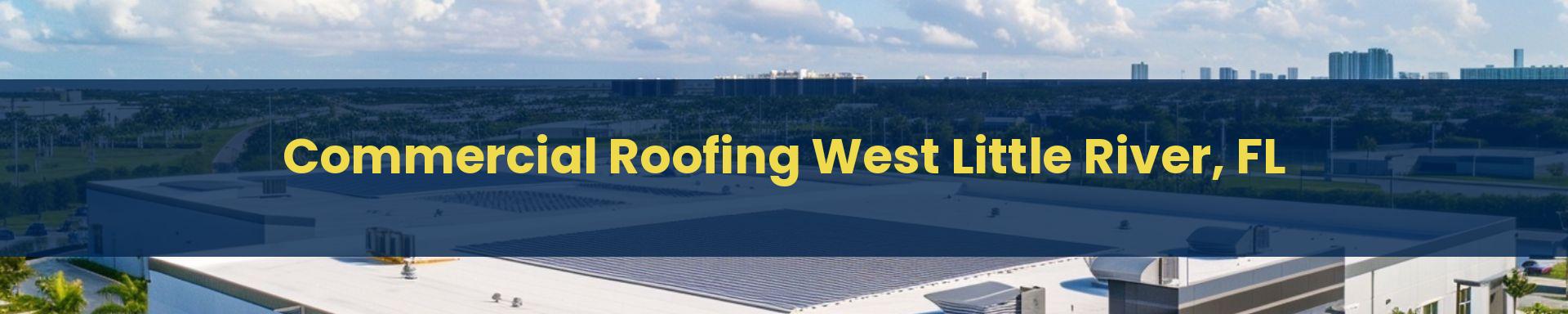
Commercial Roofing Doral delivers system-led commercial roofing in West Little River, Florida by inspecting, repairing, maintaining, restoring, and replacing commercial roof systems on neighborhood retail buildings, light industrial properties, warehouse-style facilities, service-based businesses, multifamily structures, office buildings, mixed-use assets, community commercial properties, and other commercial facilities. Commercial Roofing Doral’s commercial roofing services in West Little River are shaped by Miami-Dade County subtropical exposure, South Florida heat, high humidity, hurricane-season wind pressure, wind-driven rain, dense urban roof layouts, service-corridor roof use, rooftop mechanical equipment demand, salt-air influence, compact drainage patterns, and heavy rainfall pressure, where membrane fatigue, seam movement, flashing separation, penetration vulnerability, corrosion-sensitive details, equipment-zone wear, drainage restriction, and ponding-prone conditions can develop across commercial roofing systems, ensuring commercial roofing scope is set against verified roof performance rather than reactive patch repair, isolated leak sealing, or non-system-based maintenance approaches.
The West Little River-specific outcomes below show how confirmed commercial roofing conditions are translated into controlled scope, sequenced delivery stability, and verifiable completion records across Miami-Dade County humidity exposure, hurricane-season roof demand, wind-driven rain, dense urban commercial roof use, service-corridor activity, salt-air material stress, rooftop equipment concentration, compact stormwater drainage behaviour, and heavy rainfall conditions.
- Confirmed commercial roofing scope in West Little River → membrane fatigue, seam movement, flashing separation, penetration vulnerability, drainage restriction, corrosion-sensitive metal details, rooftop equipment wear, substrate condition, and service-corridor roof stress are verified against actual roof behaviour → commercial roofing targets confirmed system failure drivers rather than visible staining, cosmetic roof wear, or isolated leak evidence.
- Access and sequencing control for West Little River commercial roofing works → roof access, tenant operations, neighborhood retail activity, service-yard movement, light industrial use, multifamily occupancy, office access, pedestrian areas, rooftop equipment zones, material staging, storm-season timing, and weather windows are planned around active Miami-Dade commercial properties → phased delivery protects occupancy, customer access, operational continuity, and roof-system stability.
- Commercial roof system remediation in West Little River → membranes, flashings, seams, penetrations, drainage outlets, insulation layers, perimeter details, mechanical equipment interfaces, corrosion-sensitive components, and deck connections are restored as interdependent roof-system components → commercial roof performance is recovered beyond temporary patching, isolated sealant work, or short-cycle leak response.
- Flashing, seam, and penetration correction at West Little River commercial roof interfaces → parapets, curbs, vents, skylights, HVAC penetrations, wall transitions, roof edges, service entries, drainage details, compact perimeter conditions, and equipment-adjacent interfaces are secured where wind-driven rain, high humidity, salt-air influence, rooftop service activity, and dense urban roof layouts create ingress risk → leak pathways are reduced at interface details most exposed to Miami-Dade storm and moisture conditions.
- Commercial roofing system selection for West Little River conditions → building use, roof span, drainage behaviour, rooftop equipment layout, wind exposure, rainfall load, humidity stress, salt-air effects, neighborhood commercial occupancy, light industrial roof use, Miami-Dade code context, and long-term performance needs determine whether TPO, PVC, EPDM, metal roofing, built-up roofing, modified bitumen, coating, repair, recover, or replacement strategies are appropriate → commercial roofing scope is aligned with West Little River roof performance risk, storm-readiness demands, and asset protection requirements.
- Inspection records and documented closeout for West Little River commercial roofing works → roof condition findings, completed scope, installed details, inspection results, repair notes, drainage observations, equipment-zone conditions, corrosion-risk notes, substrate findings, storm-readiness notes, access notes, and closeout status are recorded for owners, property managers, facility teams, insurers, tenants, association stakeholders, and asset-planning requirements → handover, maintenance planning, storm review, insurance support, and long-term roof asset control are supported.
What Commercial Roofing Services Do We Provide In West Little River, Florida?
Commercial Roofing Doral delivers system-led commercial roofing across Doral and Miami-Dade County by inspecting, repairing, maintaining, restoring, coating, and replacing commercial roof systems on warehouses, logistics facilities, distribution centers, industrial properties, office buildings, retail centers, multifamily buildings, hospitality assets, airport-adjacent service buildings, and other commercial facilities. In Doral, commercial roofing is shaped by large low-slope roof fields, warehouse and freight activity, rooftop mechanical density, loading-zone drainage pressure, airport-area exposure, hurricane-season rainfall, wind uplift, wind-driven rain, high humidity, UV intensity, salt-air influence, and Florida Building Code performance expectations, so each roof system must be evaluated as a working building envelope rather than a visible surface with isolated defects.
Commercial Roofing Doral approaches each roof through waterproofing continuity, drainage performance, uplift resistance, membrane condition, flashing integrity, rooftop equipment detailing, substrate condition, coating viability, storm exposure, and long-term service-life planning. This allows repair, maintenance, restoration, coating, and replacement decisions to be tied to actual Miami-Dade roof performance demands instead of temporary patching, cosmetic treatment, or one-time leak response.
- Commercial Roof Inspection: condition assessment for commercial roof systems where hurricane exposure, wind uplift, wind-driven rain, ponding water, rooftop equipment traffic, and prolonged humidity place stress on seams, flashings, drains, scuppers, penetrations, edge metal, coatings, and membrane fields, identifying failure-prone zones before storm-cycle escalation or interior disruption.
- Commercial Roof Repair: targeted correction of active roof defects where loosened membranes, open seams, failed flashing, punctures, damaged drains, storm-affected edges, equipment-curb leaks, or moisture-tracking pathways are allowing water entry, restoring waterproofing continuity while the wider roof assembly remains serviceable.
- Commercial Roof Leak Detection: investigation of concealed water-entry pathways where heavy rainfall, lateral moisture migration, saturated roof layers, wall transitions, penetrations, drainage defects, or rooftop equipment interfaces allow leaks to appear away from the true ingress point, isolating the source before repeated interior staining or tenant disruption develops.
- Commercial Roof Maintenance: scheduled upkeep that protects serviceable roofs between storm events by clearing drainage routes, reviewing seams and flashings, tightening vulnerable details, documenting membrane wear, checking rooftop equipment zones, correcting minor defects, and reducing the risk that humidity, debris, and rainfall cycles convert small conditions into repair-level failures.
- TPO Commercial Roofing: reflective thermoplastic single-ply roofing for low-slope commercial buildings, using heat-welded seams, reinforced membrane fields, compatible flashing details, and drainage-aware installation to resist uplift pressure, reduce heat load, and maintain watertight performance across warehouse, retail, office, and logistics roof areas.
- Commercial PVC Roofing: welded single-ply roofing designed for moisture-heavy and operationally demanding roof areas, maintaining watertight seam continuity around rooftop equipment, penetrations, service routes, and drainage transitions while resisting chemical exposure, grease-related stress, environmental degradation, and repeated commercial roof access.
- Commercial EPDM Roofing: flexible membrane roofing for large low-slope roof areas where building movement, thermal expansion, rooftop traffic, and wind-induced stress require a resilient waterproofing layer that can absorb movement without splitting, tearing, or losing continuity at seams and perimeter details.
- Commercial Metal Roofing: metal roof systems repaired, maintained, restored, or replaced through panel-joint review, fastening assessment, edge-metal correction, sealant renewal, corrosion control, expansion detailing, and uplift-resistant attachment so exposed commercial roofs can withstand storm-driven rain, heat movement, and long-term environmental fatigue.
- Commercial Built-Up Roofing: multi-layer asphalt roof assembly used where redundancy, layered waterproofing, and durable surfacing are needed to resist repeated rainfall, roof traffic, standing-water exposure, and long-term membrane fatigue across industrial, warehouse, office, and retail roof fields.
- Commercial Modified Bitumen Roofing: reinforced asphalt membrane roofing that combines puncture resistance, flexibility, and layered waterproofing for low-slope commercial roofs exposed to rooftop equipment service, loading-area debris, storm rainfall, heat cycling, and sustained wet conditions.
- Commercial Roof Coating: fluid-applied roof protection that creates a continuous surface over suitable existing roof systems, improving weather resistance, reducing UV degradation, limiting surface water absorption, extending service life, and supporting restoration where the underlying membrane remains stable enough to preserve.
- Silicone Roof Coating: moisture-resistant coating for commercial roofs exposed to heavy rainfall, ponding-prone areas, UV load, and storm-season wetting, forming a seamless protective layer that helps defend the existing roof surface where restoration is more appropriate than replacement.
- Acrylic Roof Coating: reflective roof coating suited to serviceable commercial roof surfaces where UV exposure, heat gain, coating wear, and surface ageing need to be controlled while improving reflectivity and extending performance under South Florida sun and humidity.
- Commercial Roof Restoration: system-level renewal for roofs that remain structurally viable but need membrane repair, seam reinforcement, flashing correction, drainage improvement, surface preparation, and protective coating to extend service life without the cost or disruption of full replacement.
- Storm Damage Commercial Roof Repair: post-storm correction for commercial roofs affected by wind uplift, displaced flashing, loosened edge metal, punctured membrane, debris impact, drainage blockage, open seams, saturated areas, or equipment-zone damage after hurricane-season rainfall and wind-driven rain events.
- Commercial Roof Replacement: full removal and replacement of roof systems where repeated leaks, storm damage, uplift failure, wet insulation, substrate deterioration, drainage failure, membrane breakdown, or system-wide ageing has made repair or restoration ineffective, installing a new commercial roof assembly designed for Miami-Dade exposure and long-term building protection.
For Doral commercial properties, the correct roofing pathway depends on whether the roof is still maintainable, repairable, restorable, coatable, or ready for replacement. Commercial Roofing Doral evaluates that decision through roof condition, building use, drainage behaviour, storm exposure, equipment layout, substrate integrity, occupancy risk, and lifecycle value, giving owners and property managers a clear commercial roofing strategy instead of isolated service recommendations.
Have a question about an upcoming commercial roofing project?
When Does A West Little River Roof Issue Become A Commercial Roofing Liability?
Commercial roofing in West Little River is required where roof-level investigation confirms that a commercial roof system can no longer control water entry, resist storm exposure, maintain membrane continuity, or perform under Miami-Dade County humidity, South Florida heat, hurricane-season wind pressure, wind-driven rain, dense urban roof layouts, service-corridor activity, rooftop equipment demand, salt-air influence, compact stormwater drainage behaviour, and heavy rainfall pressure. Across West Little River and surrounding Miami-Dade commercial areas, commercial roofing becomes necessary where membranes, seams, flashings, penetrations, drainage components, insulation layers, perimeter details, corrosion-sensitive metal components, fastening points, and roof decks show verified system-level weakness that cannot be responsibly corrected through patch repair, sealant application, or isolated maintenance activity.
The West Little River-specific triggers below show when a commercial roof condition has moved beyond surface repair and requires system-level commercial roofing.
- Moisture is travelling through membrane seams, flashing junctions, roof penetrations, drains, scuppers, parapet details, or perimeter edges. When the West Little River roof assembly no longer preserves a continuous weather-control line, commercial roofing is needed to restore the full waterproofing path rather than treat the closest visible leak mark.
- Wind-driven rain is entering through open seams, weak flashings, roof-wall transitions, equipment curbs, parapet edges, or drainage details. Under Miami-Dade storm exposure, this indicates that the roof system is no longer controlling lateral water movement under pressure and requires coordinated commercial roofing correction.
- Hurricane-season uplift pressure is stressing membrane laps, perimeter metal, fasteners, roof terminations, parapet transitions, and rooftop equipment interfaces. Once wind loading begins weakening attachment points or edge stability, isolated repair cannot restore storm-ready performance across the full commercial roof assembly.
- South Florida humidity and salt-air influence are accelerating membrane ageing, coating wear, sealant failure, corrosion at metal details, or deterioration around rooftop service components. Commercial roof restoration, coating, recover, or replacement becomes necessary when environmental exposure starts reducing the durability of the roof assembly itself.
- Heavy rainfall is overwhelming drainage performance where blocked drains, restricted scuppers, low-slope geometry, undersized discharge paths, compact runoff patterns, service-corridor debris, or ponding-prone roof areas prevent controlled water removal. West Little River commercial roofs move beyond routine clearing when moisture retention, saturation risk, and membrane stress begin affecting system performance.
- Neighborhood retail activity, service-yard movement, light industrial use, multifamily occupancy, and dense commercial access are concentrating roof risk around access routes, parapets, rooftop equipment clusters, service penetrations, shared drainage paths, and compact perimeter transitions. These connected roof areas require system-level commercial roofing when repeated local fixes fail to maintain continuity across interacting details.
- Rooftop equipment zones are showing membrane abrasion, flashing gaps, vibration wear, puncture exposure, or repeated leak activity around HVAC curbs, exhaust penetrations, pipe supports, skylights, vents, and maintenance routes. These West Little River roof interfaces need coordinated correction once operational roof use starts weakening waterproofing continuity.
- Neighborhood retail, light industrial, warehouse-style, service-based, multifamily, office, community commercial, or mixed-use property demands have outgrown the current roof configuration. Commercial roofing becomes necessary when the roof system no longer supports tenant protection, customer access, operational use, storm-readiness needs, insurance expectations, drainage performance, or long-term asset protection.
- Previous patches, sealant work, coating repairs, or isolated leak responses have not stopped recurring water entry. Repeat failure usually means the active defect remains inside the membrane field, flashing network, drainage layout, insulation condition, corrosion-sensitive detailing, equipment-interface zone, fastening system, or roof deck substrate.
- Visible roof wear, historic repair notes, and interior staining do not provide enough evidence to define responsible commercial roofing scope. Structured assessment is needed where membrane integrity, insulation moisture, drainage capacity, flashing performance, corrosion risk, fastening condition, substrate stability, deck condition, service-corridor roof stress, and compact drainage behaviour must be verified before repair, maintenance, coating, recover, or replacement decisions are made.
In West Little River, commercial roofing becomes necessary once investigation confirms that water ingress, wind-driven rain vulnerability, uplift-sensitive detailing, humidity-driven material degradation, salt-air corrosion, drainage overload, flashing discontinuity, equipment-interface wear, insulation saturation, fastening weakness, substrate instability, dense urban roof complexity, service-corridor roof stress, or recurring leak behaviour cannot be resolved through isolated repair, making system-level commercial roofing the required route to restore controlled, durable, storm-ready, and performance-aligned roof protection.
Have a question about an upcoming commercial roofing project?
Which West Little River Roof Failures Create Commercial Roofing Risk?
Commercial roofing in West Little River resolves roof-system failure where water ingress, wind-driven rain exposure, hurricane-season uplift stress, humidity-driven material deterioration, salt-air corrosion, drainage overload, flashing discontinuity, rooftop service-zone wear, insulation saturation, fastening weakness, substrate instability, dense urban roof complexity, service-corridor roof stress, or recurring leak behaviour prevents a commercial roof from maintaining controlled, durable, storm-ready, and performance-aligned protection. Across West Little River and surrounding Miami-Dade commercial areas, commercial roofing is used to correct failure in neighborhood retail buildings, light industrial properties, warehouse-style facilities, service-based businesses, multifamily structures, office buildings, mixed-use assets, community commercial properties, and other commercial facilities where South Florida heat, compact urban roof layouts, service-corridor activity, rooftop mechanical demand, heavy rainfall, storm-season exposure, and moisture-sensitive detailing can concentrate breakdown across membranes, seams, flashings, penetrations, drains, scuppers, parapet details, corrosion-prone components, insulation layers, fastening points, and roof decks.
The West Little River-specific roof failures below show what commercial roofing resolves when patch repair, sealant application, isolated leak response, or non-system-based maintenance can no longer control the underlying condition.
- Water ingress across connected commercial roof details. Moisture can travel through membrane seams, flashing junctions, roof penetrations, drainage outlets, scuppers, parapet details, or perimeter edges once the West Little River roof assembly loses continuous weather protection. Full-path waterproofing correction resolves the active ingress route before leaks disrupt tenants, service operations, warehouse-style spaces, multifamily areas, or interior finishes.
- Wind-driven rain bypassing intended roof protection. Miami-Dade storm conditions can force water laterally through open seams, weak flashings, roof-wall transitions, equipment curbs, parapet edges, and drainage details. Commercial roofing corrects the interface weaknesses that allow rainfall to move beneath or behind the designed roof-shedding line.
- Uplift-sensitive roof edges and attachment points. Hurricane-season wind pressure can strain membrane laps, perimeter metal, fasteners, roof terminations, parapet transitions, and rooftop equipment interfaces. System-level commercial roofing stabilises these attachment zones before local wind damage develops into broader roof-system vulnerability.
- Humidity-driven membrane and coating deterioration. South Florida moisture and heat can accelerate blistering, coating wear, seam fatigue, sealant breakdown, membrane softening, and surface ageing across low-slope commercial roofs. Restoration, coating, recover, or replacement re-establishes durable protection before environmental stress reaches deeper roof layers.
- Salt-air corrosion around exposed roof components. Salt-influenced air can weaken flashings, fasteners, drains, scuppers, edge metal, equipment supports, and rooftop hardware. Correcting corrosion-prone components protects the commercial roof system from failure paths created by deteriorated metal details.
- Drainage overload during heavy rainfall. Blocked outlets, restricted scuppers, low-slope geometry, undersized discharge routes, compact runoff patterns, service-corridor debris, and ponding-prone roof areas can leave West Little River commercial roofs holding water. Restored drainage performance reduces stormwater backup, insulation saturation, membrane stress, and recurring moisture exposure.
- Dense urban leakage across compact roof layouts. Parapet runs, shared drainage paths, service penetrations, access points, roof-wall transitions, rooftop equipment clusters, and tight perimeter details can create overlapping failure points in West Little River commercial buildings. Commercial roofing resolves this by reconnecting continuity across interacting details rather than treating each leak mark separately.
- Service-corridor roof wear around operational access points. Loading movement, service routes, rooftop access, maintenance traffic, equipment work, and repeated operational use can concentrate membrane abrasion, puncture exposure, flashing disturbance, and recurring leak activity. Commercial roofing restores protection around these high-use roof zones before service-related wear becomes a persistent failure source.
- Breakdown at rooftop equipment and mechanical penetrations. HVAC curbs, exhaust penetrations, pipe supports, skylights, vents, access paths, and maintenance walkways can create stress at flashings, seams, membranes, fasteners, and surrounding drainage routes. Reinforcing these roof interfaces restores continuity where commercial roof defects frequently originate.
- Insulation saturation beneath the visible roof membrane. Trapped moisture can reduce thermal performance, increase concealed load, distort drainage behaviour, and keep recurring leak patterns active after surface repairs. Removing saturated insulation and rebuilding the affected assembly restores stable roof-system performance.
- Fastening weakness and substrate instability below the roof assembly. Moisture intrusion, wind stress, fastener withdrawal, corrosion, deck deterioration, or substrate movement can undermine repairs, coatings, recover systems, and replacement membranes. Correcting the base condition ensures the restored roof system can perform under storm exposure, occupied-property demand, service-area use, and humid Miami-Dade conditions.
- Recurring leak cycles after short-term repair work. Repeated patches fail when the underlying West Little River roof-system problem remains active within wind-exposed seams, flashing continuity, drainage behaviour, corrosion-sensitive detailing, insulation moisture, equipment-interface zones, fastening points, dense urban roof complexity, service-corridor roof stress, or deck condition. Root-cause commercial roofing replaces symptom-led repair with verified system correction.
- Commercial roofs that no longer support neighborhood retail, service-based, or light industrial property use. Neighborhood retail, light industrial, warehouse-style, service-based, multifamily, office, mixed-use, and community commercial roofs may fall short of tenant protection, insurance expectations, storm-readiness requirements, maintenance planning, operational access, energy-performance goals, or long-term asset protection. Aligning the roof system with actual building use restores reliability, lifecycle control, and storm-ready performance.
In West Little River, commercial roofing resolves the underlying roof-system failures behind water ingress, wind-driven rain vulnerability, uplift-sensitive detailing, humidity-driven material degradation, salt-air corrosion, drainage overload, flashing failure, rooftop equipment-interface damage, dense urban roof complexity, service-corridor roof stress, insulation saturation, fastening weakness, substrate instability, and recurring repair failure, making it the system-level route to controlled, durable, storm-ready, and performance-aligned roof protection when isolated repair is no longer sufficient.
Have a question about an upcoming commercial roofing project?
When Should West Little River Property Owners Request A Commercial Roofing Assessment?
A West Little River commercial roof needs system-level commercial roofing assessment when verified roof conditions show that the existing roof assembly can no longer control water entry, resist storm exposure, maintain membrane continuity, or perform under Miami-Dade County humidity, South Florida heat, hurricane-season wind pressure, wind-driven rain, dense urban roof layouts, service-corridor activity, rooftop equipment demand, salt-air influence, compact stormwater drainage behaviour, and heavy rainfall pressure. In West Little River, this most often affects neighborhood retail buildings, light industrial properties, warehouse-style facilities, service-based businesses, multifamily structures, office buildings, mixed-use assets, community commercial properties, and other commercial facilities where tenant continuity, service access, rooftop mechanical equipment, compact perimeter conditions, low-slope drainage design, stormwater discharge demand, and moisture-heavy exposure can intensify failure at membranes, seams, flashings, penetrations, drains, scuppers, parapet details, corrosion-sensitive components, insulation layers, fastening points, perimeter conditions, and roof decks. Where moisture is confirmed through membrane seams, flashing junctions, roof penetrations, drains, scuppers, parapet details, or perimeter conditions, commercial roofing in West Little River becomes necessary because the roof assembly is no longer maintaining continuous weather protection across the building envelope. Where wind-driven rain is entering through open seams, weak flashings, roof-wall transitions, equipment curbs, parapet edges, or drainage details, commercial roofing becomes necessary because stormwater is bypassing the roof system’s intended shedding path under Miami-Dade storm conditions. Where hurricane-season uplift pressure is stressing membrane laps, perimeter metal, fasteners, roof terminations, parapet transitions, or rooftop equipment connections, system-level commercial roofing is required because isolated patching cannot restore wind-resistance across the commercial roof assembly.
Where South Florida humidity and salt-air influence have accelerated membrane ageing, coating wear, sealant breakdown, corrosion at metal details, or deterioration around rooftop service components, commercial roofing becomes necessary because environmental exposure is reducing roof-system durability. Where dense urban roof layouts, service-corridor use, shared drainage paths, operational access, or repeated rooftop traffic have created overlapping leak activity around parapets, penetrations, equipment clusters, transition details, and compact perimeter conditions, coordinated commercial roofing is required because connected roof conditions cannot be stabilised through local sealant work alone. Where drainage performance is restricted by blocked drains, limited scupper capacity, compact runoff patterns, service-corridor debris, ponding-prone roof areas, low-slope geometry, undersized discharge paths, or heavy rainfall demand, the roof surface is no longer shedding water under controlled conditions and is instead exposed to stormwater backup, insulation saturation, membrane stress, and recurring moisture exposure. Where rooftop equipment zones, including HVAC curbs, exhaust penetrations, pipe supports, skylights, vents, access paths, and maintenance routes, show flashing gaps, vibration wear, membrane damage, puncture exposure, or repeated leak activity, commercial roofing is required because high-use roof interfaces cannot be stabilised through isolated repair alone. Where concealed moisture, saturated insulation, fastening weakness, corrosion, deck deterioration, or substrate instability exists beneath the visible roof surface, the base condition must be corrected before the roof assembly can perform reliably under Miami-Dade storm exposure, service-area use, occupied-property demand, and humid operating conditions. Where previous patch repairs, coating work, sealant applications, or isolated leak responses have failed to stop recurring water entry or roof-system instability, commercial roofing is required because the active failure mechanism remains unresolved within the membrane field, flashing network, drainage layout, corrosion-sensitive detailing, equipment-interface zones, fastening system, insulation condition, dense urban roof complexity, service-corridor roof stress, or supporting deck. Commercial Roofing Doral assesses West Little River commercial roofs against verified commercial roofing evidence so the correct commercial roofing pathway is determined by actual exposure, storm-readiness requirements, roof use, service-corridor wear, drainage behaviour, substrate condition, occupancy demands, and lifecycle needs rather than surface wear, historic patching, or incomplete inspection data. If your building in West Little River has unresolved roof leaks, wind-driven rain entry, uplift-sensitive detailing, recurring drainage problems, dense urban roof complexity, service-corridor roof stress, membrane breakdown, flashing failure, corrosion-prone components, rooftop equipment-zone damage, insulation concerns, fastening weakness, or uncertainty over whether the existing commercial roof system can remain in service, request a commercial roofing assessment to identify the correct next step.
Have a question about an upcoming commercial roofing project?