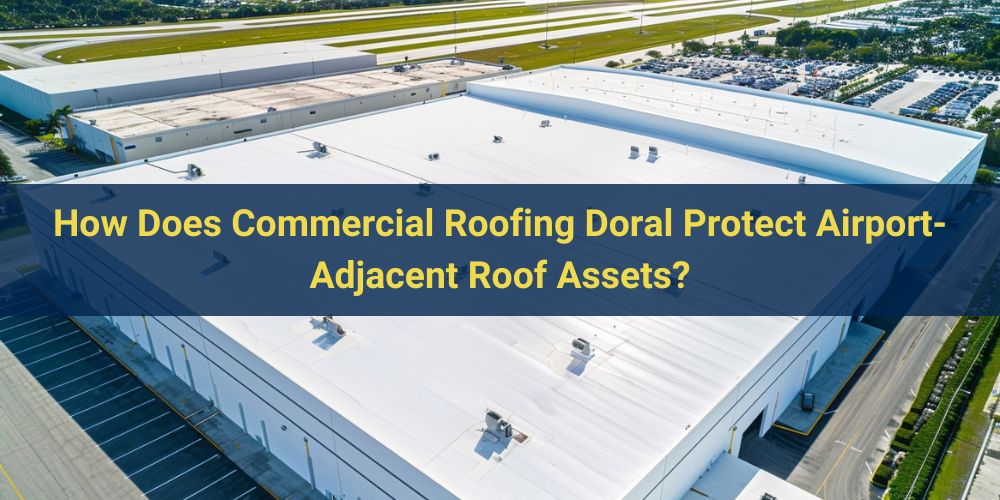
Commercial Roofing Doral protects airport-adjacent roof assets by keeping commercial roof systems stable, weather-resistant, drainable, and serviceable in Doral properties exposed to aircraft-adjacent operations, rooftop mechanical activity, vibration, heat, rainfall, wind-driven rain, debris movement, drainage pressure, and high-use commercial occupancy. This airport-adjacent roof asset protection applies to warehouses, logistics facilities, freight-related properties, distribution buildings, industrial units, flex commercial spaces, retail plazas, office buildings, restaurants, medical offices, and multi-tenant commercial properties where the roof must preserve water intrusion control, membrane stability, flashing continuity, roof edge security, penetration integrity, rooftop equipment protection, interior reliability, tenant continuity, inventory protection, and long-term roof asset value. Commercial roofing is an airport-adjacent roof asset protection service because the roof connects directly to parapet walls, coping systems, roof edges, edge metal, flashing assemblies, drainage outlets, rooftop HVAC equipment, vents, pipes, conduits, skylights, service lines, penetrations, insulation, cover boards, roof decks, interior ceilings, tenant areas, equipment rooms, inventory zones, and stored commercial assets. Commercial Roofing Doral is not limited to isolated leak patching, surface repair, or roof covering replacement; it evaluates whether the roof is still controlling exterior water, vibration-sensitive details, rooftop equipment stress, wind-driven rain entry, drainage load, debris exposure, hidden moisture damage, and service-life decline before those conditions reduce airport-adjacent roof asset performance.
In Doral, airport-adjacent roof asset protection is shaped by proximity to Miami-area aviation and logistics activity, heavy commercial vehicle movement, warehouse operations, rooftop HVAC demand, frequent service traffic, Miami-Dade rainfall, humid air, high UV exposure, tropical storm influence, wind-driven rain, low-slope drainage sensitivity, ponding water risk, debris accumulation, and thermal cycling. These conditions can weaken the roof’s role as a commercial asset by accelerating membrane ageing, seam fatigue, flashing movement, sealant breakdown, coating wear, roof edge weakness, fastener stress, penetration-related leak risk, rooftop equipment vibration, drainage restriction, insulation exposure, cover board deterioration, substrate instability, concealed moisture movement, parapet deterioration, and roof-to-wall transition failure. Commercial Roofing Doral evaluates airport-adjacent roof asset risk by assessing roof system type, membrane condition, seam integrity, roof attachment, roof-to-wall continuity, parapet details, coping systems, edge metal, flashing continuity, penetration sealing, rooftop equipment zones, drainage behaviour, ponding exposure, insulation risk, cover board condition, substrate stability, prior repairs, moisture evidence, debris exposure, equipment-adjacent wear, wind-sensitive details, storm exposure, and remaining service life. This determines whether the roof asset is best protected through maintenance, leak detection, targeted repair, flashing correction, penetration reinforcement, rooftop equipment zone reinforcement, drainage correction, membrane reinforcement, roof coating, broader restoration, partial replacement, full commercial roof replacement, documentation, or lifecycle planning.
Commercial Roofing Doral functions as a Doral airport-adjacent roof asset protection service where the commercial roof must preserve separation between exterior exposure, rooftop operational stress, and interior commercial use. The service applies when flat commercial roofs, low-slope commercial roofs, TPO roofing, EPDM roofing, PVC roofing, modified bitumen roofing, built-up roofing, metal roofing, or coated roof assemblies must keep water intrusion, wind-driven rain, heat-related deterioration, rooftop equipment movement, penetration failure, drainage overload, debris-related damage, vibration-sensitive detail failure, and roof assembly deterioration from affecting occupied space, stored materials, tenant areas, freight operations, equipment rooms, electrical zones, restaurant interiors, office interiors, retail finishes, warehouse inventory, rooftop mechanical zones, and daily commercial operations.
- Roof as airport-adjacent asset layer → the commercial roof receives Miami-Dade sun, heat, rainfall, wind-driven rain, humidity, debris movement, service traffic, rooftop equipment exposure, and airport-adjacent operational stress before those conditions reach interior commercial areas → membranes, seams, flashings, parapets, roof edges, edge metal, drains, scuppers, gutters, penetrations, insulation, cover boards, and roof decks become the primary roof-side control points for airport-adjacent roof asset performance → Commercial Roofing Doral evaluates and protects these control points through inspection, maintenance, targeted repair, reinforcement, coating, restoration, partial replacement, or full replacement where required → water entry, hidden assembly damage, rooftop detail deterioration, and weather-driven roof asset decline are reduced → the Doral commercial roof remains a more reliable airport-adjacent asset.
- Rooftop equipment and service-traffic exposure → airport-adjacent commercial properties often depend on rooftop HVAC units, exhaust systems, vents, conduits, service lines, equipment supports, walk pads, and repeated maintenance access → vibration, service traffic, displaced flashing, cracked sealants, worn walk paths, equipment-adjacent membrane fatigue, and penetration stress can weaken the roof asset before full leakage is visible → Commercial Roofing Doral evaluates rooftop equipment zones, penetration sealing, curb flashings, walk paths, support areas, membrane condition, moisture evidence, and remaining service life before recommending repair, re-flashing, reinforcement, restoration, coating, partial replacement, or replacement planning → equipment-related roof weaknesses are corrected at the source → equipment rooms, tenant spaces, stored materials, and commercial operations receive stronger protection.
- Drainage and debris-control performance → low-slope commercial roofs in Doral depend on clear drains, open scuppers, functional gutters, stable slopes, crickets, saddles, and controlled water routing to keep rainfall and debris from loading the roof asset → blocked drainage, debris accumulation, restricted outlets, ponding water, saturated low areas, deteriorated seams, weakened flashings, and water-retaining details increase moisture pressure on the roof assembly → Commercial Roofing Doral evaluates drainage behaviour as part of airport-adjacent roof asset protection and determines whether clearing, repair, slope correction, membrane reinforcement, coating, restoration, partial replacement, or replacement planning is required → water-retaining conditions and moisture-entry pathways are reduced → roof asset condition, interior protection, and lifecycle cost control improve.
- Roof-to-wall and perimeter asset continuity → commercial roofs connect into parapet walls, coping systems, perimeter edges, wall flashings, edge metal, termination details, vertical transitions, and adjacent exterior wall assemblies → wind-driven rain, heat movement, ageing, loose metal, poor detailing, service exposure, and Miami-Dade storm conditions can weaken the continuity between the roof perimeter and the wider commercial roof asset → Commercial Roofing Doral identifies vulnerable roof-to-wall and edge conditions before perimeter weakness becomes recurring leakage or wider roof asset failure → edge-related leaks, parapet deterioration, moisture migration, wind-driven rain entry, and transition failures are reduced → commercial interiors and perimeter asset continuity receive stronger protection.
- Doral airport-adjacent exposure conditions → aviation-area logistics activity, rooftop mechanical demand, service traffic, humid air, high UV exposure, heavy rain, tropical storm influence, wind-driven rain, ponding sensitivity, debris accumulation, and thermal cycling place stress on the roof as an airport-adjacent asset → membranes, coatings, seams, sealants, flashing details, edge systems, penetrations, insulation, cover boards, roof decks, roof-to-wall connections, rooftop equipment zones, and prior repairs can deteriorate before full roof asset failure is visible inside the building → Commercial Roofing Doral matches maintenance, repair, coating, restoration, partial replacement, or full commercial roof replacement to the actual exposure profile, moisture evidence, roof system type, asset vulnerability, and remaining service life → premature roof asset deterioration is controlled where the roof remains viable → airport-adjacent roof asset service life is extended where condition-based protection remains reliable.
Commercial Roofing Doral applies commercial roofing as controlled airport-adjacent roof asset protection, not as disconnected surface repair. By confirming roof condition, membrane performance, seam integrity, flashing continuity, roof-to-wall stability, parapet condition, edge metal security, penetration risk, rooftop equipment exposure, drainage behaviour, moisture evidence, debris accumulation, vibration-sensitive details, storm exposure, substrate stability, hidden assembly risk, asset vulnerability, and remaining service life before recommending work, Commercial Roofing Doral protects the commercial roof as an airport-adjacent asset for Doral commercial buildings.
How Do Rooftop Equipment Zones Affect Airport-Adjacent Roof Assets in Doral?
Rooftop equipment zones affect airport-adjacent roof assets in Doral because logistics, warehouse, retail, office, restaurant, medical, flex industrial, and multi-tenant commercial buildings often depend on HVAC units, exhaust systems, vents, pipes, conduits, service lines, equipment supports, walk pads, skylights, drains, scuppers, and maintenance access routes that interrupt the roof surface. Commercial Roofing Doral evaluates these zones as roof asset control points where equipment load, service traffic, vibration-sensitive details, flashing continuity, penetration sealing, drainage behaviour, membrane condition, and moisture evidence determine whether the commercial roof can continue protecting interior use, tenant areas, inventory, equipment rooms, electrical zones, and daily commercial operations.
In Doral and the wider Miami-Dade area, airport-adjacent commercial roof assets are exposed to rooftop mechanical demand, repeated service access, humid air, high UV exposure, heavy rainfall, wind-driven rain, tropical storm influence, debris accumulation, low-slope drainage sensitivity, ponding water, and thermal cycling. These conditions can weaken equipment-adjacent roof areas by accelerating curb flashing movement, sealant breakdown, membrane abrasion, punctures, coating wear, fastener stress, equipment support movement, walk pad deterioration, drain restriction, penetration-related leak risk, insulation exposure, cover board deterioration, substrate instability, concealed moisture movement, and prior repair failure.
Commercial Roofing Doral treats rooftop equipment zones as airport-adjacent roof asset risks because a small defect around a curb, vent, pipe, conduit, drain, equipment support, service path, or prior repair can become a larger roof asset problem when repeated maintenance traffic, equipment vibration, heavy rainfall, and wind-driven rain stress the same area. The objective is to determine whether inspection, leak detection, targeted repair, re-flashing, penetration reinforcement, equipment-zone reinforcement, drainage correction, membrane repair, roof coating, broader restoration, partial replacement, full commercial roof replacement, documentation, or lifecycle planning is required to preserve airport-adjacent roof asset performance.
- HVAC curbs and mechanical equipment zones → airport-adjacent commercial properties in Doral often rely on rooftop HVAC units, exhaust systems, service platforms, equipment supports, and repeated maintenance access → curb movement, cracked sealants, loose flashing, vibration-sensitive details, service traffic, and equipment-adjacent membrane fatigue can create roof asset weakness before interior leakage is visible → Commercial Roofing Doral evaluates curb flashings, equipment supports, surrounding membrane condition, moisture evidence, substrate stability, and remaining service life before recommending repair, re-flashing, reinforcement, restoration, coating, partial replacement, or replacement planning → mechanical-zone vulnerabilities are corrected at the source → equipment rooms, tenant areas, inventory zones, and commercial operations receive stronger protection.
- Penetrations and service-line interruptions → vents, pipes, conduits, skylights, service lines, drains, and equipment-related penetrations interrupt the roof’s airport-adjacent asset layer → poor flashing height, cracked sealant, open laps, loose boots, membrane punctures, incompatible repairs, or ponding water around penetrations can allow water to move into insulation, cover boards, roof decks, ceilings, electrical zones, and tenant spaces → Commercial Roofing Doral inspects penetration sealing, confirms flashing continuity, repairs open details, reinforces vulnerable openings, restores surrounding membrane areas, or replaces failed detail zones according to roof system type → penetration-related leak pathways are reduced → interior protection and roof asset reliability improve.
- Walk paths and service traffic wear → maintenance access around rooftop equipment, drains, mechanical units, skylights, exhaust systems, and service lines can concentrate foot traffic on membranes, coatings, seams, laps, walk pads, and prior repair areas → abrasion, punctures, compressed insulation, coating wear, displaced patches, seam stress, and membrane fatigue can weaken the roof asset in high-use zones → Commercial Roofing Doral evaluates walk path condition, traffic-related membrane wear, seam integrity, coating viability, insulation risk, and moisture evidence before recommending walk pad correction, targeted repair, membrane reinforcement, coating, restoration, partial replacement, or replacement planning → service-traffic damage is controlled before it spreads into wider roof asset deterioration → lifecycle cost control and commercial roof serviceability improve.
- Drainage interaction around equipment zones → low-slope commercial roofs in Doral depend on clear drains, open scuppers, functional gutters, stable slopes, crickets, saddles, and unobstructed water routing around rooftop equipment and service paths → blocked drains, debris accumulation, ponding water near curbs, restricted outlets, saturated low areas, deteriorated seams, and weakened flashing details can keep moisture against equipment-adjacent roof components → Commercial Roofing Doral evaluates drainage behaviour, clears restrictions, repairs water-sensitive details, reinforces affected membrane areas, identifies ponding-sensitive zones, and determines whether coating, restoration, partial replacement, or full replacement is required → water-retaining conditions around equipment zones are reduced → hidden moisture damage, recurring leaks, and roof asset decline are better controlled.
- Prior repairs near rooftop equipment → patched seams, layered sealant, temporary leak repairs, incompatible coatings, aged flashing repairs, and undocumented work often appear around equipment curbs, penetrations, drains, service paths, and high-traffic rooftop zones → humid air, heavy rainfall, wind-driven rain, thermal cycling, rooftop service activity, and equipment movement can reopen these repaired areas and push moisture into insulation, cover boards, roof decks, ceilings, or tenant spaces → Commercial Roofing Doral evaluates prior repairs as diagnostic evidence, identifies whether the source condition remains active, removes unreliable repair assumptions, and recommends targeted correction, reinforcement, restoration, partial replacement, or full replacement according to roof condition → recurring equipment-zone leak cycles are reduced at the source → airport-adjacent roof asset protection becomes more durable and easier to document.
Commercial Roofing Doral protects airport-adjacent roof assets by treating rooftop equipment zones, penetrations, service paths, drains, curb flashings, support details, walk pads, prior repairs, moisture evidence, substrate condition, and remaining service life as asset control points. By confirming whether these areas can resist equipment stress, service traffic, rainfall, wind-driven rain, debris accumulation, thermal movement, and hidden moisture exposure, Commercial Roofing Doral keeps airport-adjacent roof asset weakness from becoming wider commercial property disruption in Doral.
Have a question about an upcoming commercial roofing project?
How Do Miami-Dade Exposure Conditions Weaken Airport-Adjacent Roof Assets in Doral?
Miami-Dade exposure conditions weaken airport-adjacent roof assets in Doral when heavy rainfall, humid air, high UV exposure, wind-driven rain, tropical storm influence, rooftop mechanical demand, service traffic, debris accumulation, low-slope drainage sensitivity, ponding water, and thermal cycling act on the commercial roof as an exterior asset. Commercial Roofing Doral evaluates these exposure conditions for warehouses, logistics facilities, freight-related properties, distribution buildings, industrial units, flex commercial spaces, retail plazas, office buildings, restaurants, medical offices, and multi-tenant commercial properties where the roof must preserve water intrusion control, membrane stability, flashing continuity, rooftop equipment protection, drainage performance, interior reliability, tenant continuity, inventory protection, and long-term roof asset value.
In Doral and the wider Miami-Dade area, airport-adjacent roof assets can be weakened by exposure pathways that act across the roof surface, perimeter, drainage system, rooftop equipment zones, and hidden roof assembly. Flat commercial roofs, low-slope commercial roofs, TPO roofing, EPDM roofing, PVC roofing, modified bitumen roofing, built-up roofing, metal roofing, and coated roof assemblies can deteriorate when membranes, seams, laps, flashings, parapets, coping systems, roof edges, edge metal, drains, scuppers, gutters, insulation, cover boards, roof decks, penetrations, HVAC curbs, vents, pipes, conduits, skylights, service lines, rooftop equipment supports, coatings, sealants, walk pads, and prior repairs are repeatedly exposed to rainfall, humidity, UV, wind-driven rain, debris, rooftop service activity, and temperature movement.
Commercial Roofing Doral evaluates airport-adjacent roof exposure by tracing how exterior conditions move from the roof surface into asset weakness, hidden moisture risk, interior consequence, and service-life loss. This applies when a Doral commercial roof is showing membrane ageing, coating wear, open seams, lifted laps, flashing movement, cracked sealants, clogged drains, ponding water, debris accumulation, rooftop equipment leaks, worn walk paths, penetration defects, moisture evidence, insulation saturation risk, cover board deterioration, substrate instability, prior repair failure, or uncertainty around remaining service life. The objective is to determine whether maintenance, leak detection, targeted repair, flashing correction, penetration reinforcement, drainage correction, membrane reinforcement, roof coating, broader restoration, partial replacement, full commercial roof replacement, documentation, or lifecycle planning will best preserve airport-adjacent roof asset performance.
- Rainfall and low-slope drainage exposure → heavy Miami-Dade rainfall loads drains, scuppers, gutters, crickets, saddles, shallow-slope areas, equipment-adjacent low points, and discharge paths on Doral commercial roofs → blocked outlets, debris accumulation, ponding water, saturated low areas, deteriorated seams, weakened flashings, and restricted drainage can push moisture into insulation, cover boards, roof decks, ceilings, tenant areas, inventory zones, and equipment rooms → Commercial Roofing Doral evaluates drainage behaviour, clears restrictions, repairs water-sensitive details, reinforces affected membrane areas, identifies ponding-sensitive zones, and determines whether coating, restoration, partial replacement, or full replacement is required → water-retaining conditions and moisture-entry pathways are reduced → airport-adjacent roof asset condition, interior protection, and lifecycle cost control improve.
- Humidity and concealed moisture persistence → humid Miami-Dade air can keep vulnerable roof details, prior repairs, shaded equipment zones, penetration bases, drain areas, and ponding-sensitive sections damp for longer periods → sealant breakdown, coating wear, membrane deterioration, insulation moisture risk, cover board deterioration, concealed dampness, substrate instability, and recurring leak paths can develop before roof asset failure is visible inside the building → Commercial Roofing Doral reviews moisture evidence, penetration sealing, flashing continuity, rooftop equipment zones, substrate stability, prior repair reliability, and remaining service life before recommending maintenance, targeted repair, reinforcement, restoration, partial replacement, or replacement → moisture pathways are addressed at the roof-side source → hidden assembly damage and service-life loss are better controlled.
- UV exposure and heat-related asset ageing → Doral sun and Miami-Dade heat act directly on exposed membranes, coatings, seams, laps, sealants, flashings, edge metal, walk paths, and rooftop equipment zones → brittleness, oxidation, cracking, shrinkage, seam fatigue, coating erosion, fastener stress, membrane surface deterioration, and detail movement can weaken the airport-adjacent roof asset → Commercial Roofing Doral confirms roof system type, membrane condition, coating viability, seam integrity, flashing continuity, heat-aged details, and remaining service life before recommending targeted repair, reinforcement, roof coating, restoration, partial replacement, or full replacement → heat-related deterioration is controlled where the roof remains serviceable → roof asset value and long-term serviceability are extended.
- Wind-driven rain and tropical storm exposure → Miami-Dade storm conditions can drive water against parapets, coping joints, roof edges, wall flashings, membrane terminations, curb flashings, skylight details, vents, pipes, conduits, and rooftop equipment zones → flashing gaps, open laps, cracked sealants, weak terminations, curb defects, loose edge metal, wind-sensitive details, or poor roof-to-wall continuity can allow water to move into insulation, cover boards, roof decks, ceilings, tenant spaces, electrical zones, inventory areas, and equipment rooms → Commercial Roofing Doral evaluates wind-sensitive details, flashing continuity, roof-to-wall transitions, penetration sealing, perimeter conditions, moisture evidence, and prior repairs before recommending re-flashing, reinforcement, targeted repair, restoration, partial replacement, or replacement planning → wind-driven rain pathways are reduced → interior reliability, tenant continuity, and airport-adjacent roof asset protection improve.
- Debris accumulation and rooftop service activity → airport-adjacent logistics activity, rooftop mechanical demand, repeated maintenance access, debris movement, service traffic, and equipment-area work can stress membranes, coatings, seams, walk pads, drains, scuppers, curb flashings, penetrations, rooftop equipment supports, and prior repairs → punctures, abrasion, displaced flashing, clogged drainage, worn walk paths, cracked sealants, open penetrations, and equipment-adjacent membrane fatigue can create roof asset vulnerabilities → Commercial Roofing Doral evaluates debris-sensitive areas, service paths, equipment zones, drainage outlets, membrane wear, penetration conditions, prior repair performance, and moisture evidence before recommending cleaning, targeted repair, reinforcement, coating, restoration, partial replacement, or replacement planning → exposure-related roof weaknesses are corrected before they spread → commercial operations, asset value, and roof lifecycle performance are better protected.
Commercial Roofing Doral protects airport-adjacent roof assets by connecting Miami-Dade exposure conditions to roof asset condition before exterior stress becomes interior disruption or service-life loss. By evaluating rainfall, humidity, UV exposure, wind-driven rain, tropical storm influence, rooftop equipment demand, debris accumulation, drainage behaviour, moisture evidence, hidden assembly risk, substrate stability, prior repairs, and remaining service life, Commercial Roofing Doral determines whether the Doral commercial roof can be maintained, reinforced, restored, partially replaced, or fully replaced as an airport-adjacent roof asset.
Which Doral Commercial Properties Need Airport-Adjacent Roof Asset Protection?
Doral commercial properties need airport-adjacent roof asset protection when the roof protects occupied space, stored materials, tenant areas, freight-related operations, rooftop equipment, service corridors, electrical zones, food-service interiors, medical-use interiors, logistics activity, retail finishes, equipment rooms, or operational assets below. Commercial Roofing Doral protects airport-adjacent roof assets for commercial, industrial, warehouse, logistics, freight-related, distribution, airport-adjacent, retail, office, medical, restaurant, flex industrial, and multi-tenant buildings where flat commercial roofs, low-slope commercial roofs, TPO roofing, EPDM roofing, PVC roofing, modified bitumen roofing, built-up roofing, metal roofing, and coated roof assemblies must preserve water intrusion control, membrane stability, flashing continuity, rooftop equipment protection, drainage performance, tenant continuity, inventory protection, commercial operation reliability, and long-term roof asset value.
In Doral and the wider Miami-Dade area, property-level airport-adjacent roof asset risk is shaped by logistics activity, warehouse operations, rooftop mechanical demand, repeated service access, heavy rainfall, humid air, high UV exposure, wind-driven rain, tropical storm influence, debris accumulation, low-slope drainage sensitivity, ponding water, and thermal cycling. These conditions can turn roof weakness into property-level disruption when membranes, seams, laps, flashings, parapets, coping systems, roof edges, edge metal, drains, scuppers, gutters, insulation, cover boards, roof decks, penetrations, HVAC curbs, vents, pipes, conduits, skylights, service lines, rooftop equipment supports, coatings, sealants, walk pads, or prior repairs no longer function as a connected airport-adjacent roof asset assembly.
Commercial Roofing Doral evaluates each property type according to the commercial consequence of airport-adjacent roof asset failure, not only the visible roof defect. A clogged drain above warehouse inventory, a failed curb flashing above restaurant equipment, a worn walk path above office suites, a penetration leak above medical-use interiors, a displaced membrane section above logistics operations, or hidden moisture below a low-slope roof assembly can create different levels of operational risk. The objective is to determine whether inspection, leak detection, preventative maintenance, targeted repair, flashing correction, penetration reinforcement, equipment-zone reinforcement, drainage correction, membrane reinforcement, roof coating, broader restoration, partial replacement, full commercial roof replacement, documentation, or lifecycle planning will best preserve roof asset reliability, tenant continuity, inventory protection, equipment protection, interior finishes, commercial property value, and long-term service life.
- Warehouse and logistics buildings → large roof areas, long drainage runs, loading operations, stored inventory, racking systems, rooftop HVAC units, freight-related activity, and airport-adjacent logistics use increase the consequence of roof asset failure → membrane punctures, open seams, ponding areas, clogged drains, penetration leaks, worn service paths, rooftop equipment stress, or weak roof edges can affect stock, electrical zones, equipment, warehouse interiors, loading continuity, and operational scheduling → Commercial Roofing Doral evaluates roof system condition, drainage behaviour, membrane performance, penetration risk, rooftop equipment zones, service-traffic wear, moisture evidence, substrate stability, prior repairs, and remaining service life before recommending maintenance, targeted repair, reinforcement, coating, restoration, partial replacement, or full replacement → airport-adjacent roof weaknesses are corrected before they become property-wide disruptions → inventory protection, operational continuity, asset value, and lifecycle cost control improve.
- Industrial and flex commercial buildings → industrial properties and flex units often combine office areas, storage zones, service bays, equipment rooms, production spaces, utility penetrations, rooftop mechanical systems, tenant-specific improvements, and repeated roof access beneath one airport-adjacent roof asset → rooftop equipment vibration, service traffic, thermal cycling, open seams, flashing movement, curb leaks, drainage weakness, substrate instability, and prior repairs can create roof asset risk across mixed-use commercial interiors → Commercial Roofing Doral reviews roof-to-wall transitions, edge security, rooftop equipment zones, penetration sealing, membrane condition, drainage performance, moisture evidence, substrate stability, and repair history before selecting targeted repair, reinforcement, restoration, partial replacement, or full replacement → roof work is matched to the building functions below → commercial operations, equipment areas, tenant improvements, and roof asset service life remain better protected.
- Retail centers and restaurants → customer-facing spaces, dining areas, kitchens, tenant finishes, signage zones, grease exhaust equipment, HVAC curbs, shared roof areas, service corridors, and public-use interiors depend on stable roof asset performance → failed flashings, open penetrations, clogged drains, displaced edge metal, deteriorated seams, worn coatings, ponding water, rooftop equipment leaks, debris accumulation, or service-path damage can create stains, odors, damaged finishes, slip risks, equipment exposure, tenant complaints, and business interruption → Commercial Roofing Doral prioritizes flashing continuity, penetration reinforcement, equipment-zone review, drainage correction, membrane repair, coating viability, and detail-zone restoration according to roof condition and interior consequence → visible interior disruption and recurring leak sources are reduced → customer environments, tenant continuity, commercial usability, and property value are strengthened.
- Office and medical office buildings → office buildings and medical offices rely on controlled interior conditions, protected workspaces, records, ceiling systems, finishes, electrical zones, medical-use areas, tenant comfort, equipment rooms, and uninterrupted professional use → water intrusion, insulation saturation, displaced flashings, roof deck exposure, HVAC-adjacent leaks, worn walk paths, rooftop equipment stress, membrane movement, or penetration defects can disrupt work areas, medical interiors, tenant suites, and building operations → Commercial Roofing Doral evaluates membrane condition, seam integrity, roof-to-wall transitions, edge security, rooftop equipment curbs, service access routes, drainage behaviour, moisture evidence, substrate stability, exposure-sensitive details, and remaining service life before recommending leak detection, targeted repair, re-flashing, reinforcement, coating, restoration, partial replacement, or full replacement → roofing work is prioritized according to occupied-building consequence → interior reliability, tenant continuity, roof asset protection, and lifecycle planning improve.
- Multi-tenant commercial properties → one roof asset may protect multiple suites, lease areas, shared corridors, mechanical zones, utility runs, retail units, restaurant interiors, office spaces, storage areas, service routes, and property management responsibilities → repeated leaks, unclear source conditions, patched seams, penetration failures, parapet weakness, loose edge metal, drainage defects, rooftop equipment movement, debris-sensitive areas, or service-traffic damage can create tenant disruption, repair disputes, recurring maintenance costs, documentation needs, and accelerated roof asset decline → Commercial Roofing Doral manages roof condition as a shared airport-adjacent roof asset by identifying source-level defects, prioritizing risk by affected occupancy, documenting repair or replacement pathways, and matching maintenance, reinforcement, restoration, partial replacement, or full replacement to roof condition → roof decisions become clearer across multiple occupancies → tenant continuity, asset protection, property value, and roof lifecycle control are better protected.
Commercial Roofing Doral protects airport-adjacent roof assets by connecting roof condition to the commercial consequences inside each Doral property type. By evaluating property use, roof system type, membrane condition, seam integrity, flashing continuity, roof-to-wall stability, penetration risk, rooftop equipment exposure, service-traffic wear, drainage behaviour, debris accumulation, moisture evidence, hidden assembly condition, prior repairs, Miami-Dade exposure conditions, substrate stability, and remaining service life, Commercial Roofing Doral defines the roof asset pathway that protects interior use, tenant continuity, inventory, equipment, finishes, commercial operations, property value, and long-term airport-adjacent roof performance.
When Should a Doral Property Request an Airport-Adjacent Roof Asset Assessment?
A Doral commercial property should request an airport-adjacent roof asset assessment when a flat, low-slope, TPO, EPDM, PVC, modified bitumen, built-up, metal, or coated commercial roof is showing recurring leaks, moisture staining, open seams, lifted laps, deteriorated flashing, rooftop equipment leaks, worn walk paths, clogged drains, ponding water, debris accumulation, membrane punctures, coating wear, penetration defects, parapet movement, roof edge weakness, insulation saturation risk, cover board deterioration, substrate instability, prior repair failure, or uncertainty around remaining service life. Airport-adjacent roof asset protection is most effective when the roof is assessed before water intrusion, rooftop equipment stress, service-traffic wear, drainage failure, hidden moisture movement, or roof assembly deterioration removes lower-impact maintenance, targeted repair, reinforcement, coating, restoration, or partial replacement options.
In Doral and the wider Miami-Dade area, airport-adjacent commercial roofs are shaped by logistics activity, warehouse operations, rooftop mechanical demand, repeated service access, heavy rainfall, humid air, high UV exposure, wind-driven rain, tropical storm influence, debris accumulation, low-slope drainage sensitivity, ponding water, and thermal cycling. Roofs with cracked sealants, loose flashings, worn equipment-adjacent membrane areas, damaged walk pads, blocked drains, deteriorated scuppers, ponding-sensitive low areas, patched seams, rooftop equipment vibration, open penetrations, or repeated leak points should be reviewed before those conditions progress into wider airport-adjacent roof asset failure, interior disruption, inventory exposure, tenant complaints, or accelerated replacement urgency.
Commercial Roofing Doral evaluates airport-adjacent roof asset assessment requests by reviewing roof system type, membrane condition, seam integrity, lap condition, flashing continuity, roof-to-wall transitions, parapet details, coping systems, edge metal, penetration sealing, rooftop equipment zones, HVAC curb condition, service-path wear, walk pad condition, drain and scupper performance, debris-sensitive areas, ponding exposure, insulation risk, cover board condition, moisture evidence, prior repairs, substrate stability, exposure-sensitive details, replacement urgency, and remaining service life. This determines whether the correct next step is preventative maintenance, leak detection, targeted roof repair, re-flashing, penetration reinforcement, equipment-zone reinforcement, drainage correction, membrane reinforcement, roof coating, broader roof restoration, partial replacement, full commercial roof replacement, documentation, or lifecycle planning.
Requesting an assessment early helps prevent airport-adjacent roof asset protection from being addressed too late, after recurring water entry, saturated insulation, roof deck deterioration, unstable substrate conditions, failed flashings, open penetrations, rooftop equipment-related leaks, damaged service paths, major drainage restriction, or hidden assembly deterioration has made lower-impact roof protection unreliable. When the roof is evaluated while it remains serviceable, Commercial Roofing Doral can determine whether roofing work can restore water intrusion control, protect rooftop equipment zones, improve drainage performance, reinforce penetration details, reduce service-traffic damage, preserve hidden assembly condition, and extend the service life of the airport-adjacent commercial roof asset.
If your Doral commercial property has leaks, rooftop equipment concerns, flashing stress, penetration defects, worn walk paths, debris accumulation, clogged drains, ponding water, roof edge concerns, parapet movement, moisture evidence, open seams, coating wear, prior repair failure, or uncertainty around whether the roof requires maintenance, repair, reinforcement, coating, restoration, partial replacement, or full replacement, request an airport-adjacent roof asset assessment from Commercial Roofing Doral to define the correct next step based on roof condition, exposure risk, rooftop equipment demand, service-traffic wear, drainage behaviour, moisture evidence, service-life viability, interior consequence, asset preservation, and long-term airport-adjacent roof performance.
Have a question about an upcoming commercial roofing project?